
The Christmas Story
From Glory to the Manger. Have you ever tried to picture what it truly meant for Jesus to be born?
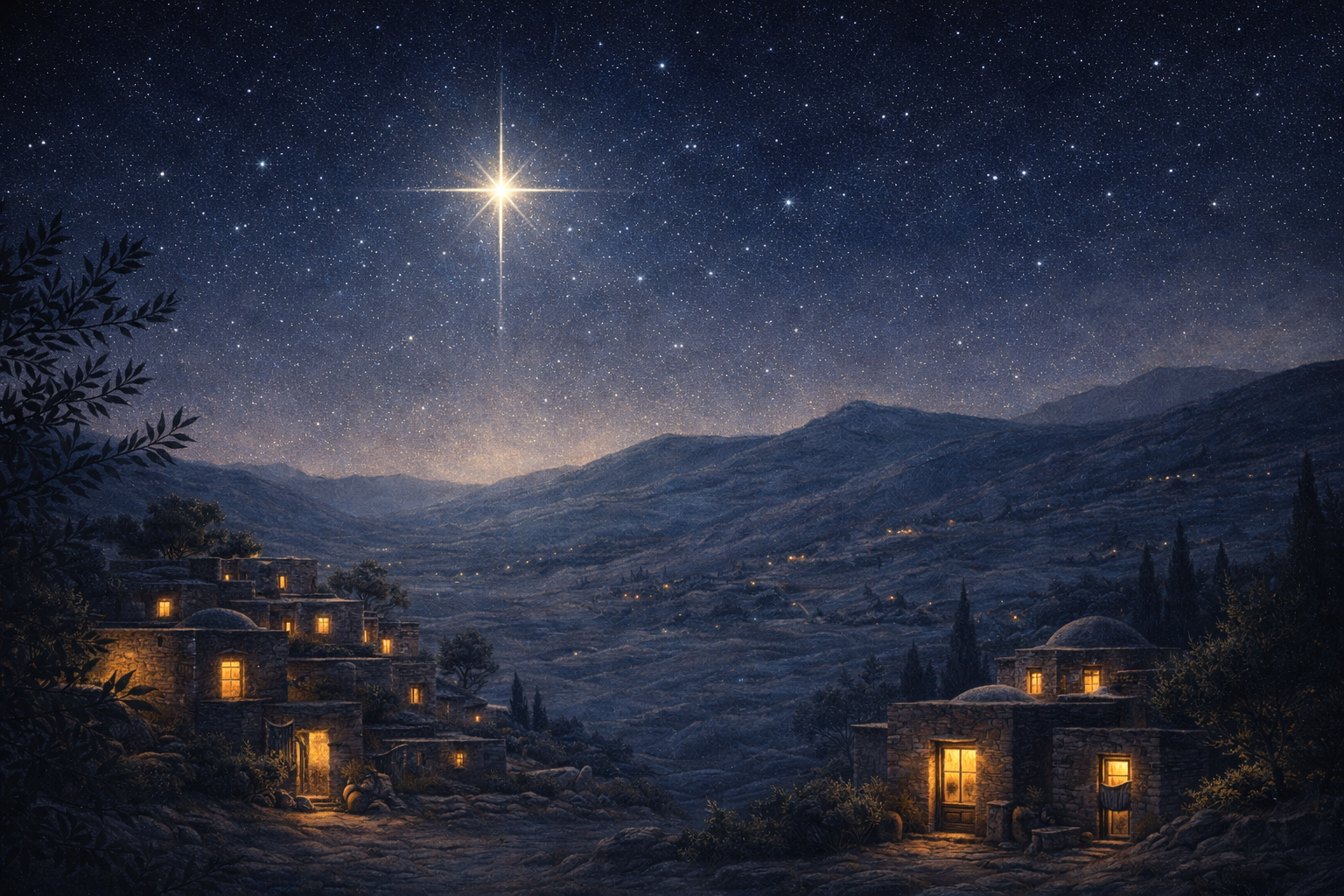
Before there was a star over Bethlehem, before Mary wrapped Him in cloth, before shepherds ran through the dark, Jesus already was. He did not begin in a cradle. He existed in glory, in perfect holiness, in the joy and honor of heaven. Scripture speaks of Him as the Word who was with God and was God, the One through whom all things were made. He shared the Father’s throne, the Father’s light, the Father’s name. Angels did not advise Him; they worshiped Him. Creation did not instruct Him; it obeyed Him.
And then, in a choice that no human mind could invent, He stepped down.

Not because He lacked anything. Not because heaven was incomplete. Not because He was forced. He came because love moved Him. The Son of God looked upon a world broken by sin—men and women made for fellowship with God but severed by rebellion—and He did not turn away. He did not send a lesser messenger. He did not stand at a distance. He came Himself.
The apostle Paul says it plainly: though He existed in the form of God, He did not cling to that position as something to be held for His own advantage. He emptied Himself, taking the form of a servant. He humbled Himself, not only to become human, but to become human for us. The downward path that began in Bethlehem led to the purpose for which He came. Christmas is not a detour from salvation; it is its beginning
So when we open the Gospel accounts, we are stepping into the middle of a miracle already in motion.
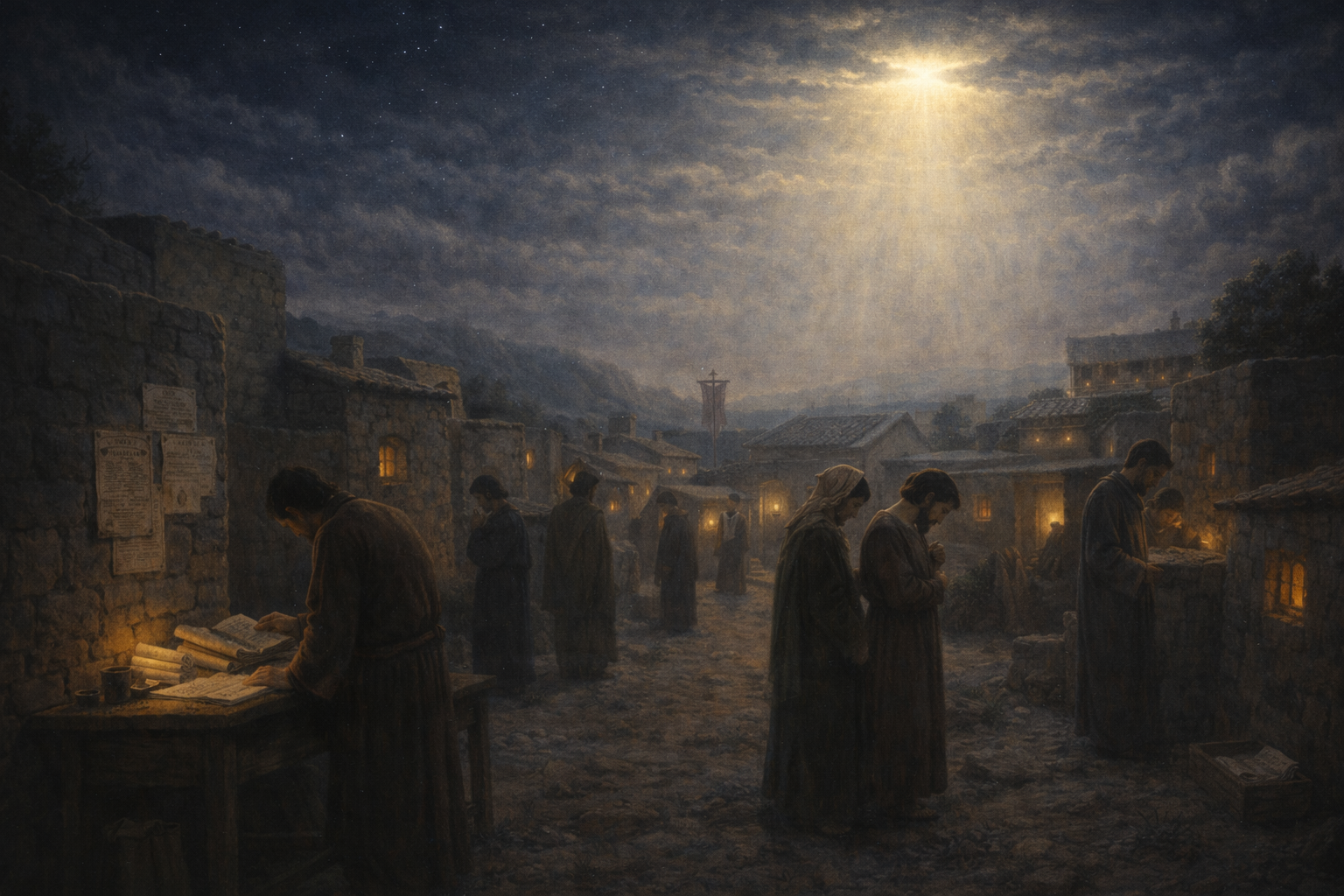
Israel in those days was small beneath a massive empire. Rome ruled the roads, the taxes, the census, and the courts. Many worked hard to survive. Families lived close together, sharing small homes. The air often carried the weight of waiting—waiting for justice, for mercy, for God’s promises to speak again after centuries of silence. The prophets had said a Deliverer would come. The people hoped for a King. But few imagined that the King would arrive the way He did.
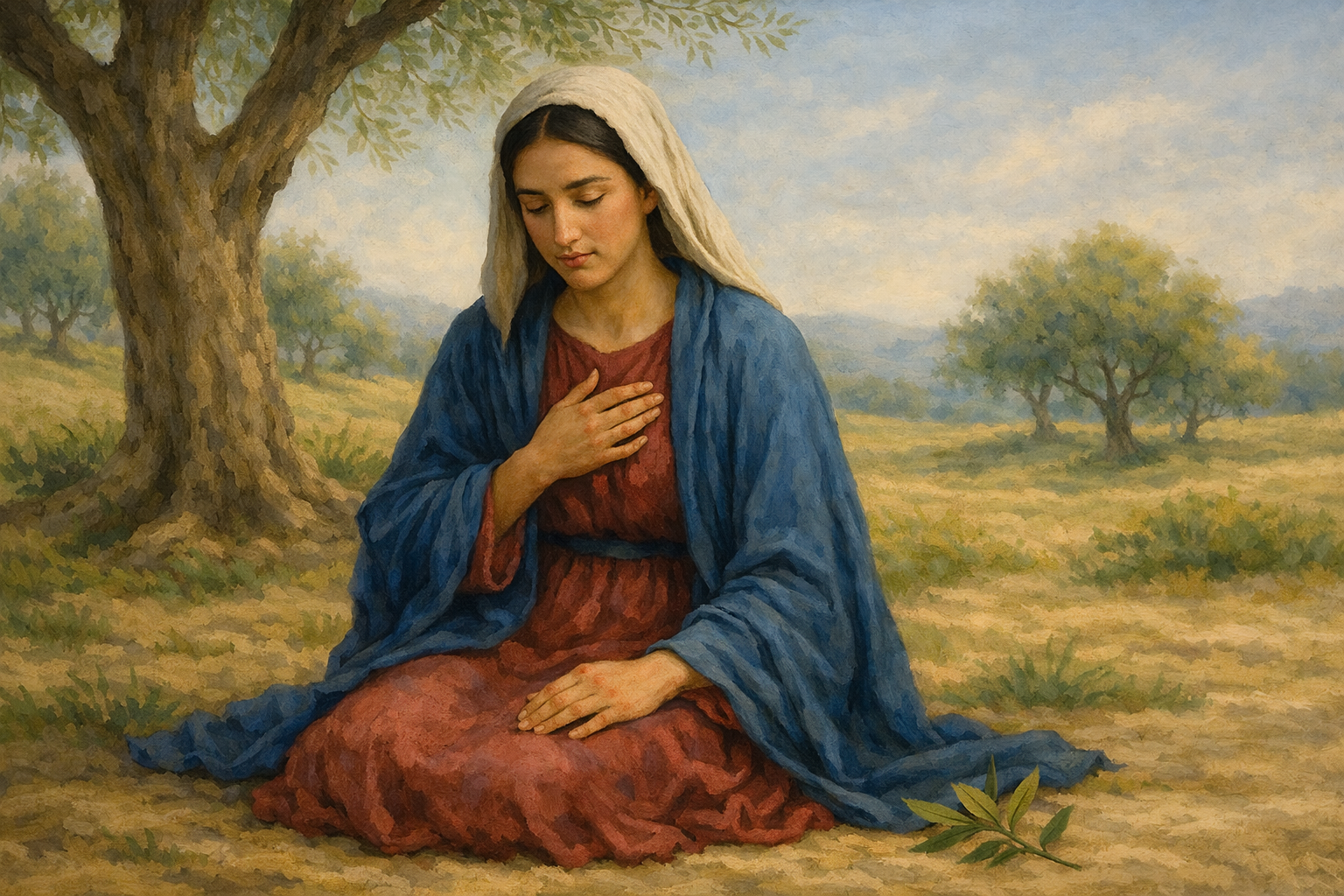
In a village of Judea lived a young Jewish woman named Mary. Scripture does not dress her in royal colors or surround her with painted halos. It presents her simply: a daughter of Israel, humble, faithful, and startled by grace. When the angel told her she would bear a son by God’s power, her questions were not disbelief but wonder. And her answer was not pride, but surrender: “Let it be to me according to your word.”
That sentence is quietly earthshaking. In it, Mary agreed to carry a holy calling that would cost her reputation, comfort, and certainty. She agreed when she had every reason to fear what others might say. She agreed without knowing the whole road ahead. Faith often looks like that—trusting God where life becomes hard to explain.
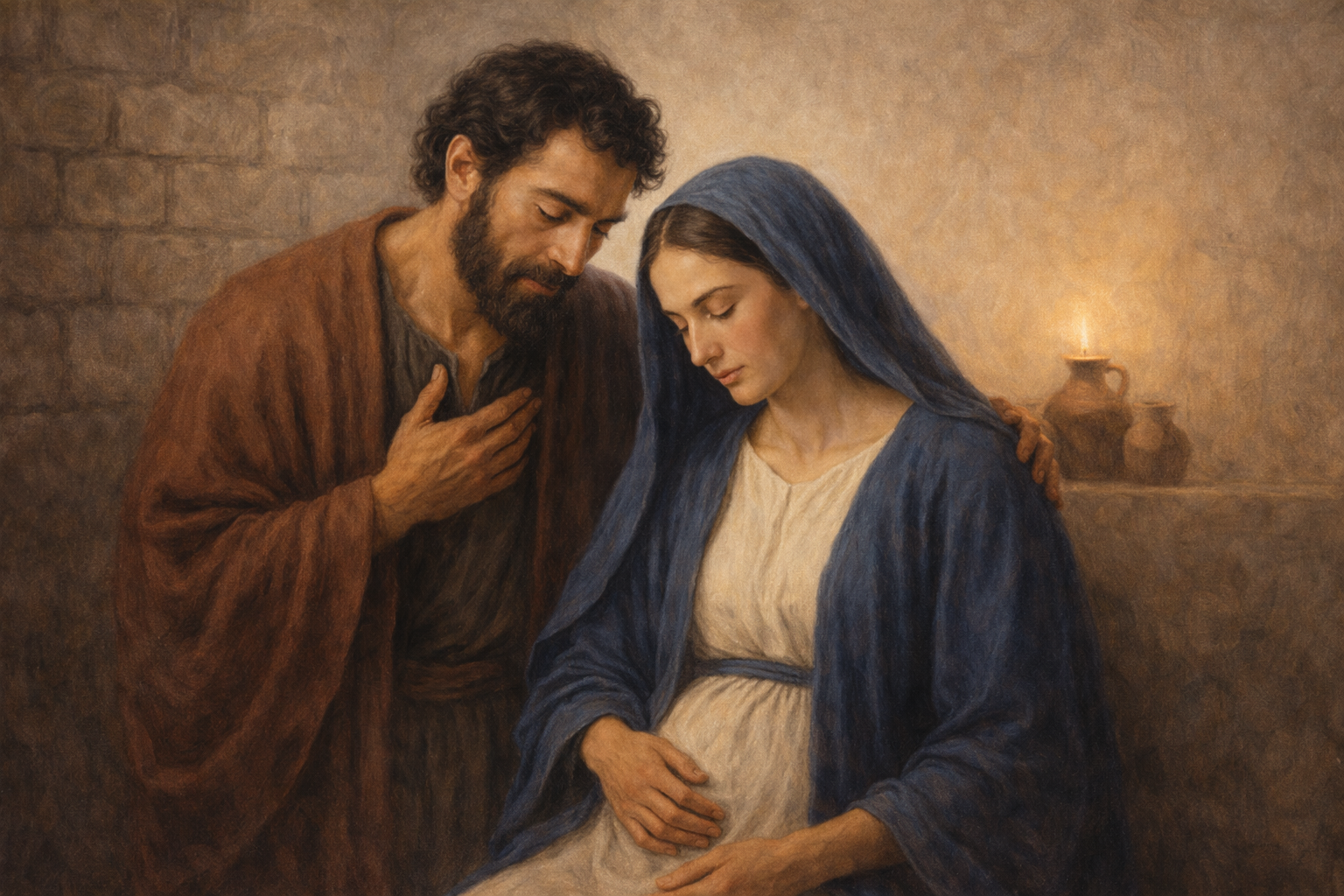
Joseph, her betrothed, is introduced with the same plain honesty. He was a righteous man, meaning he loved God’s law and wanted to do what was right. When he learned Mary was pregnant, he intended to end their engagement quietly to spare her shame. The Scripture shows his mercy. Then God spoke to him as well: the child was conceived by the Holy Spirit; Mary had not been unfaithful. Joseph believed in God, and that belief shaped his life forever. He took Mary as his wife and accepted the burden of protecting a miracle the world would not understand.
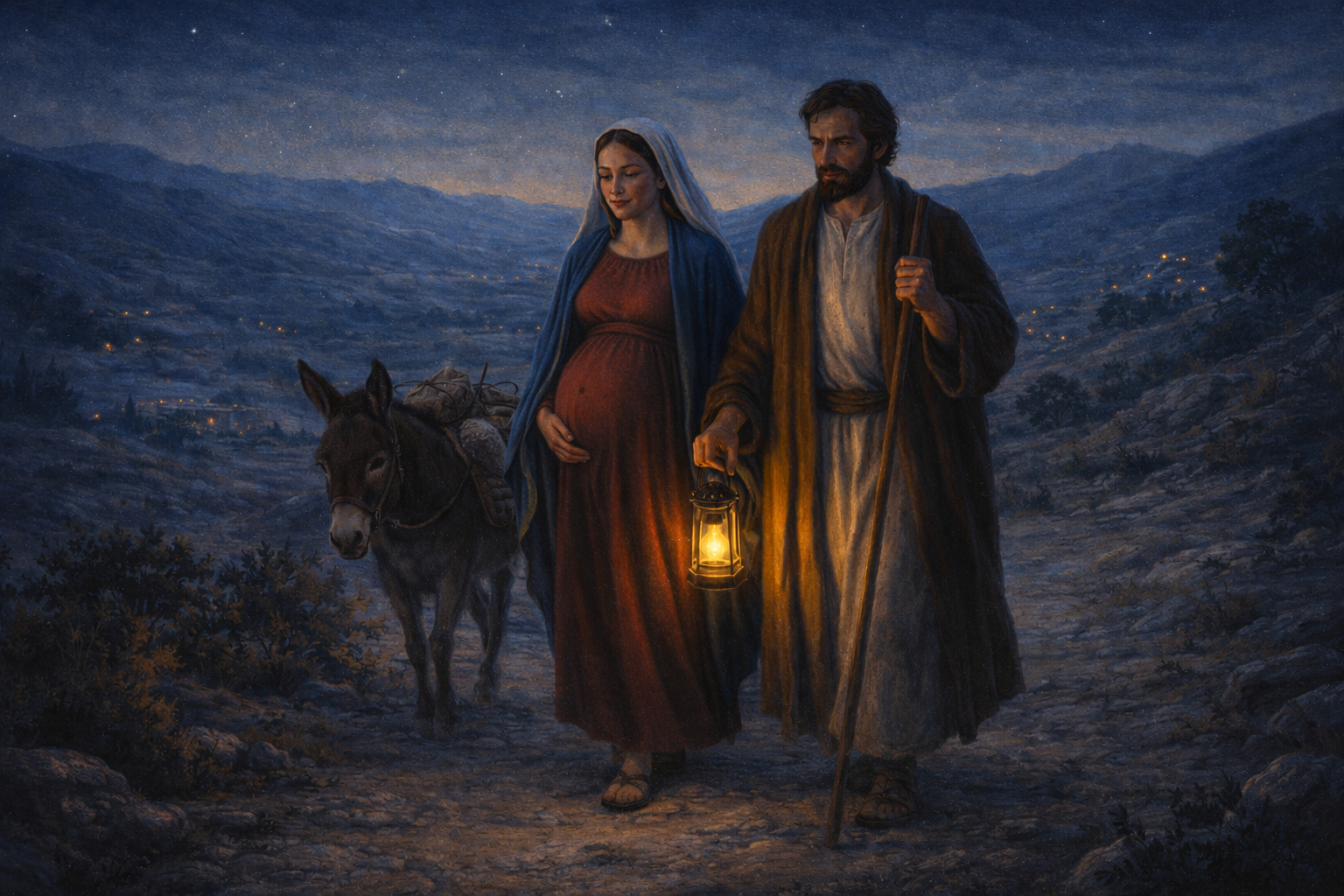
Not long after, a decree was issued requiring people to register in their ancestral towns. Joseph, being from David’s line, traveled with Mary to Bethlehem. The Gospels do not linger on the details we often add. They do not say she rode a donkey. They do not describe a glowing caravan. They do not romanticize the road. We are told they went.
That simple statement still contains the grit of real life. Bethlehem was not next door. The journey was long, made harder by Mary’s pregnancy, and framed by the simple obedience of two people who were doing what God and government required, even when it was uncomfortable. The Savior’s arrival was woven into ordinary hardship. God’s greatest work entered human history through faithful steps on dusty roads.
When they reached Bethlehem, the town was crowded with others who had come for the census. Housing was scarce. The Gospels tell us there was no place for them in the guest space. That does not mean every person was cruel; it means the small town was full. The poor had little leverage. So Mary and Joseph sheltered where animals were kept—likely a lower, rough area attached to a household or a cave-like space used for livestock. The point Scripture makes is not architectural; it is theological. The Son of God entered our world at the lowest rung.
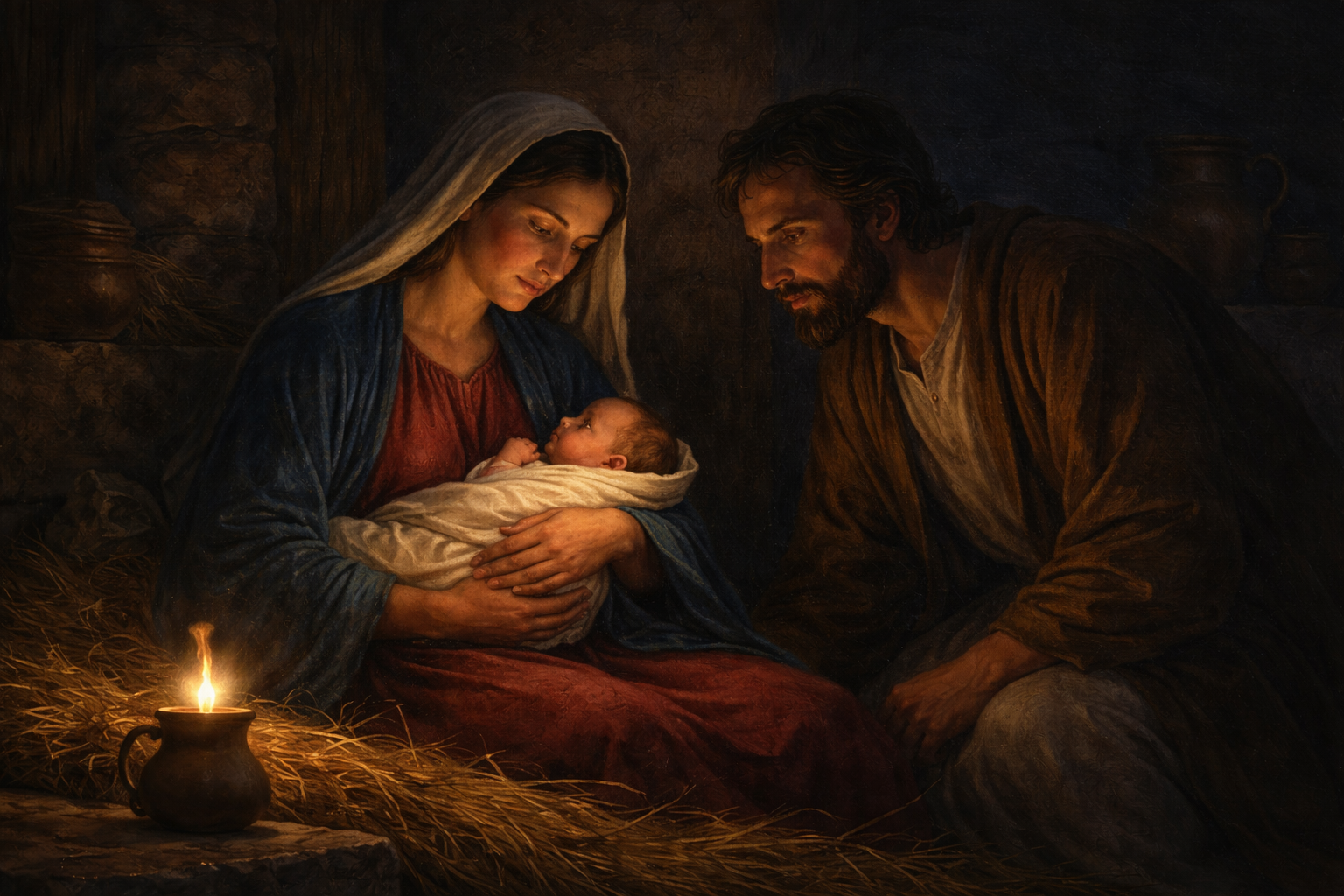
There, in that humble place, Mary gave birth.
No choir is recorded in the room. No golden light is described spilling through rafters. The Bible gives no invented decoration. It establishes that she bore her firstborn son. She wrapped Him in strips of cloth. She laid Him in a feeding trough because there was nowhere else. The One who clothed the lilies was clothed by His mother’s hands. The One who sustains every breath drew His first. The One before whom seraphim veil their faces blinked at lamplight and shadows.
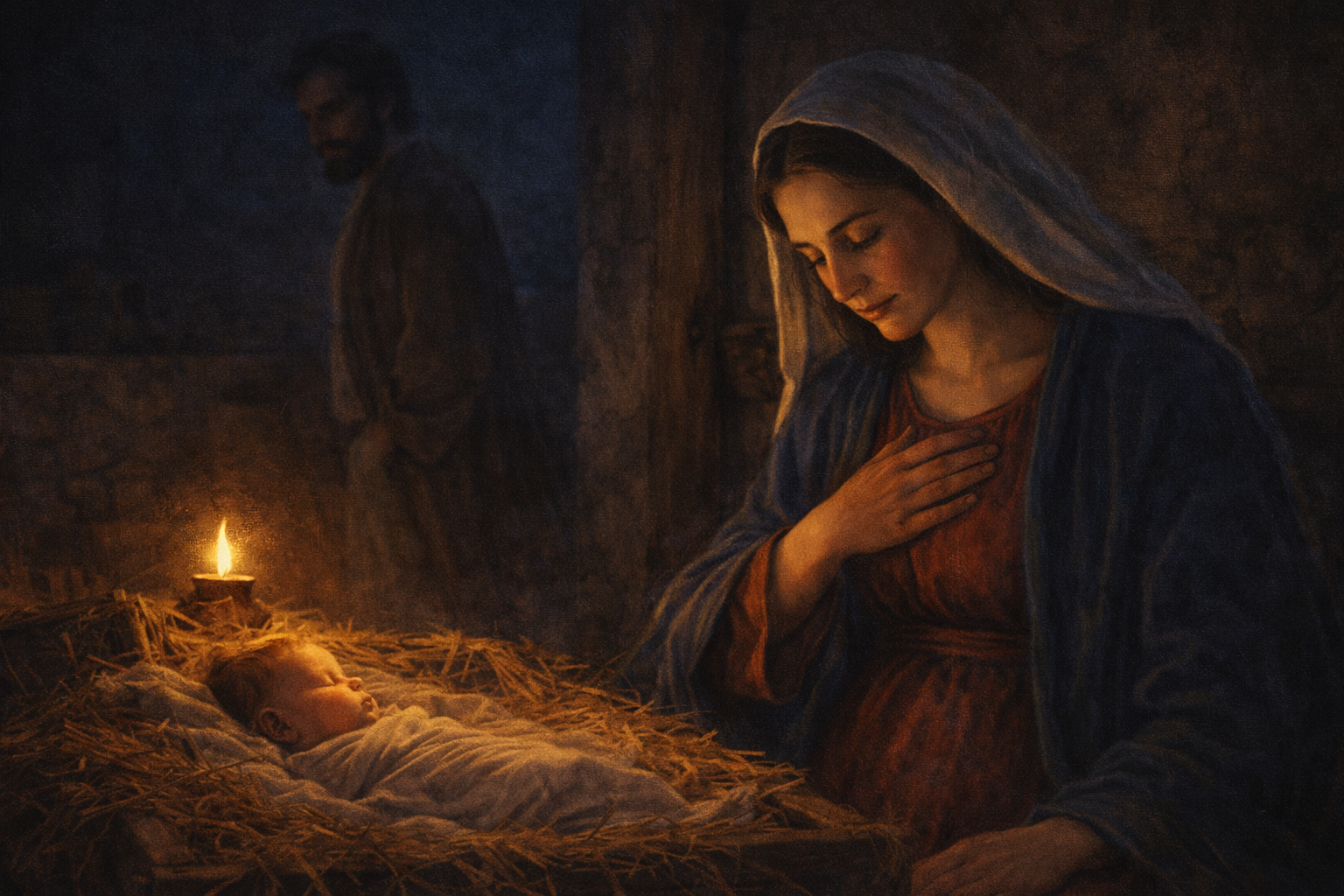
Let that land in your heart.
Jesus did not come as a prince in a palace. He did not arrive surrounded by the powerful. He allowed Himself to be born into a world that could not even make room for Him. This was not an accident of timing. It was the shape of His mission. He came low so that no one would ever say, “He cannot understand me.” He stepped into poverty, fatigue, and vulnerability so that no sinner would ever think they were beyond His reach.
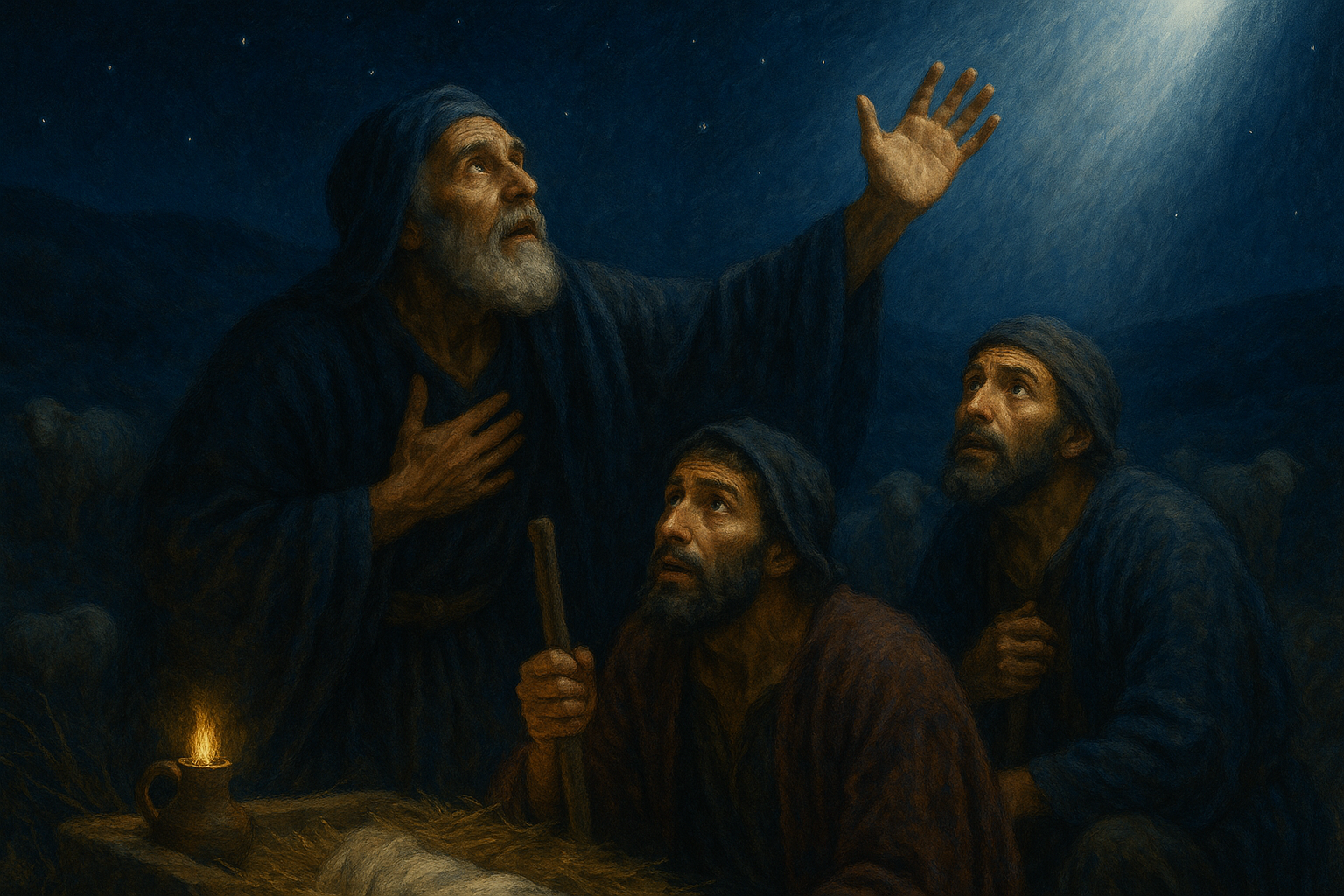
While the child slept, shepherds were keeping watch over their flocks in the fields outside town. Shepherds were ordinary laborers. They worked nights. Their hands were rough. Their lives were not celebrated. Yet God chose them as the first witnesses. An angel appeared and announced glad tidings: a Savior had been born in David’s city, Christ the Lord. The sign was not a crown or a palace, but a baby wrapped in cloth and lying in a manger.
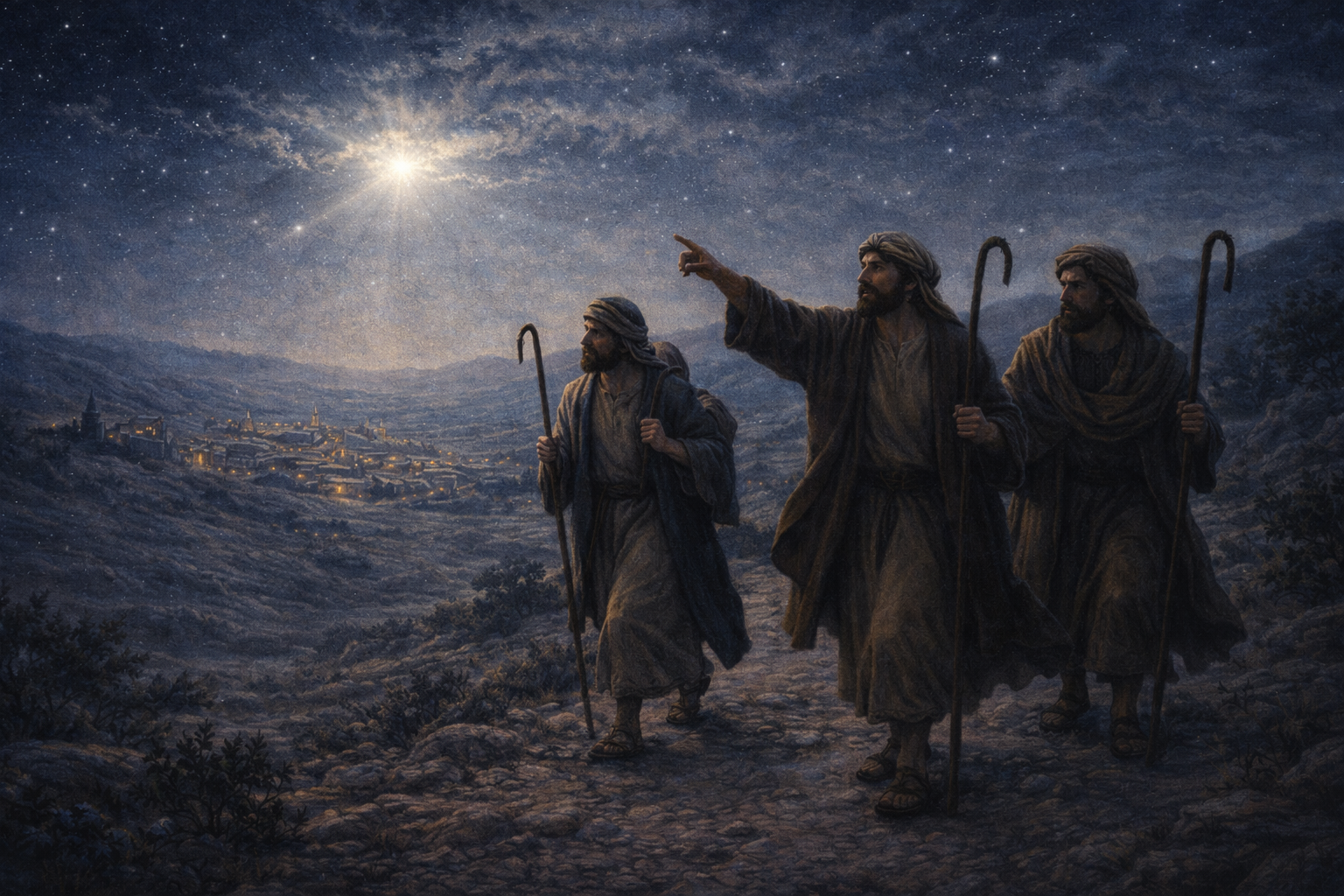
Then heaven broke its silence with praise—glory to God in the highest, and peace on earth among those with whom He is pleased. The shepherds hurried to see what God had done. They found the child just as they had been told.
Again, Scripture stays tender and factual. It does not place a halo over Joseph or make Mary into a myth. It shows a mother treasuring what she cannot fully take in. It shows men amazed that God invited them into the moment. It shows worship rising from the low places.
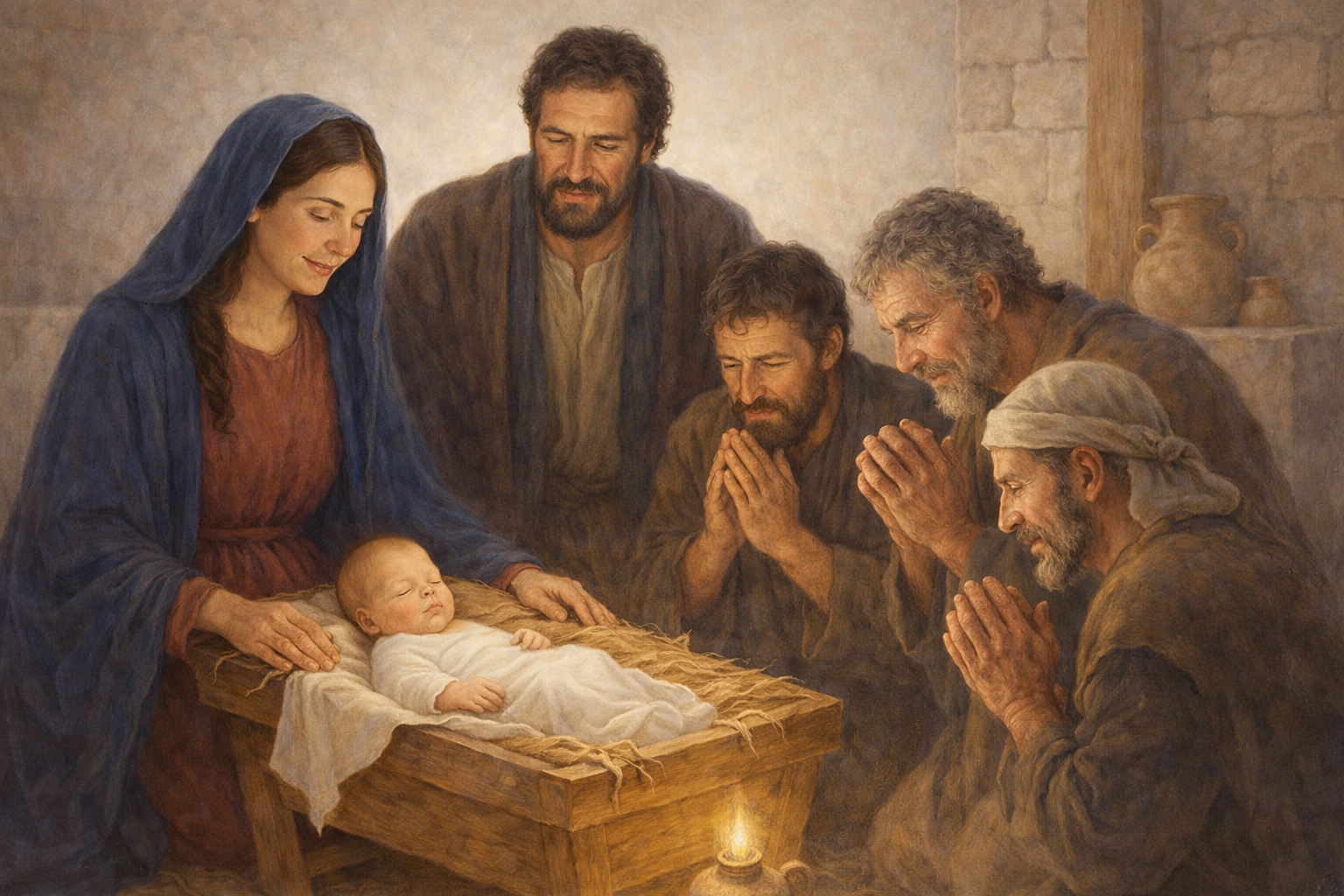
This is the Christmas story as the Bible gives it: the Eternal Son taking on flesh, entering a world that did not notice the weight of what was happening. Heaven’s King lying in borrowed shelter. The Maker of humanity, now a human child. The Holy One among the unimportant. The Lord of angels welcomed by shepherds.
Why did He come this way?
Because salvation required it, humanity could not climb its way back to God. Sin had cut the bridge. So God lowered Himself to us. The ladder Jacob once saw in a dream became a Person. The rescue Joseph’s life prefigured arrived in fullness. The Law given through Moses would be perfectly fulfilled by One who carried it in His heart. The Passover lamb that saved Israel by blood pointed forward to the Lamb of God who would take away the sin of the world.
Christmas is the first step of that Lamb toward the altar.
If we celebrate only the sweetness of a baby, we miss the depth of the miracle. The wonder is not just that a child was born. The wonder is that the Son who shared the Father’s glory chose the path of humility for our sake. He did not lose His deity; He clothed it in humanity. He did not stop being Lord; He became Servant. He did not drift into our world; He entered it on purpose.
He came to live the life we could not live, to die the death we deserved, and to rise as the victory we could not win. The manger was not the end of His descent—it was the beginning of our redemption.
So on Christmas, we do more than remember a night long ago. We worship the love that stepped down. We celebrate the Light that entered darkness. We bow before the Highest King who chose the lowliest birth, so that sinners could be lifted into the family of God.
