
Jacob’s Ladder (Genesis 28)
Have you ever wished there were a bridge between heaven and earth?
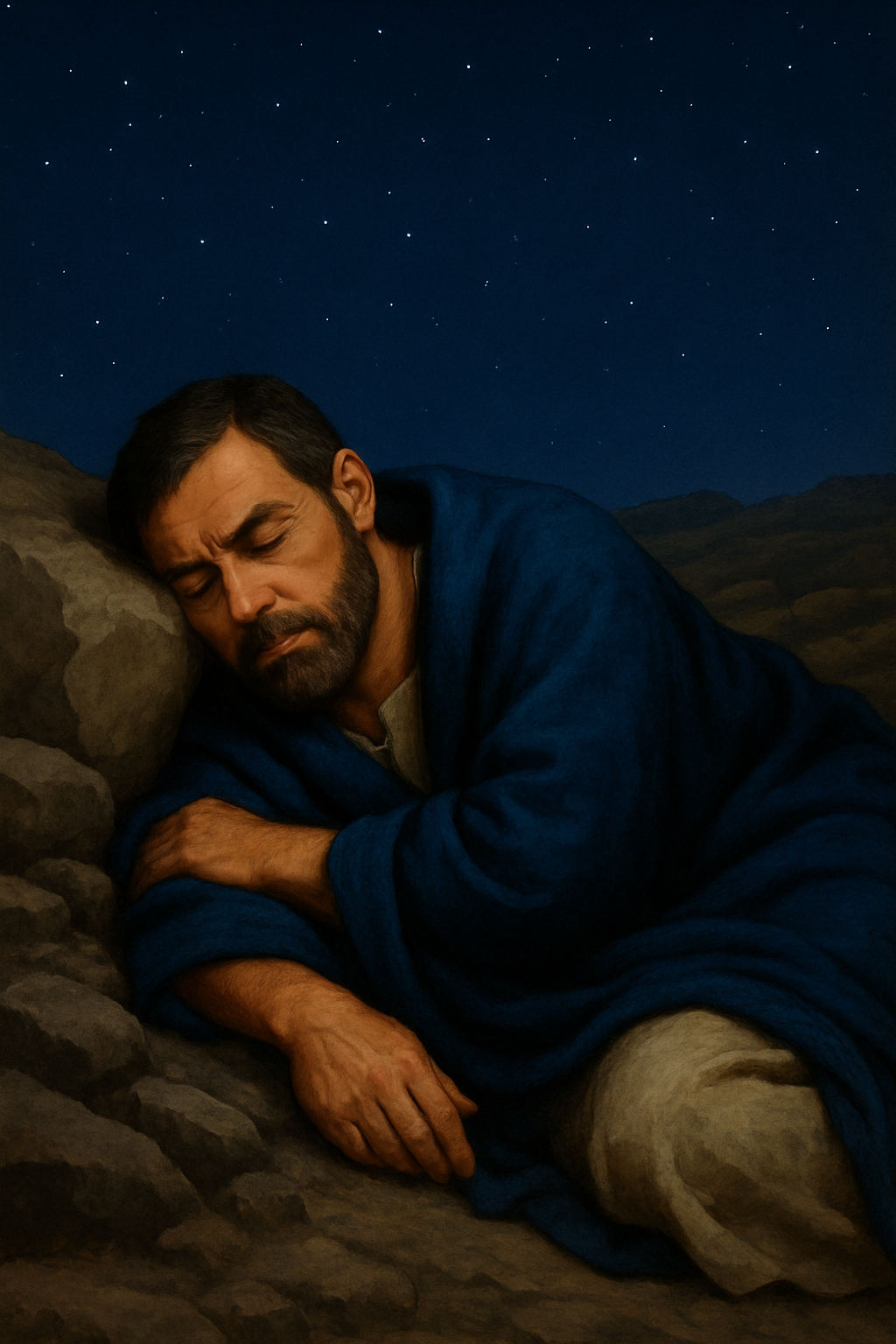
A way to know that God sees you, remembers you, and is closer than the silence around you suggests? That longing sits at the heart of Jacob’s story. He wasn’t in a peaceful season of life when God reached out to him. Jacob had deceived his brother Esau and fled his home in fear and guilt. Now alone on the road to Haran, he found himself lying under the night sky with a stone for a pillow, unsure of his future and unsure of where he stood with God. It is in this vulnerable, lonely moment that God chose to speak.
To understand why Jacob was alone in the wilderness, we need to step back for a moment. Jacob was one of twin brothers — Jacob and Esau — the sons of Isaac and Rebekah. Esau was the firstborn and heir to the family birthright, but Jacob desperately wanted that blessing. Scripture tells us that Jacob, guided by his mother, deceived his aging father, Isaac. Disguised as Esau, Jacob received the blessing meant for his brother.
Esau was heartbroken and furious. The family home, once filled with promise, became a place of strain and danger. To protect Jacob, Isaac and Rebekah sent him away to live with relatives in Haran.
This is the setting of Jacob’s Ladder — not a peaceful journey, but a flight from home, heavy with guilt, fear, and uncertainty. Jacob had made mistakes. He had deceived his brother. He was running for his life. Yet it was in this moment of loneliness and failure that God met him.
Jacob lay down with a stone for a pillow, unsure of what the future held… and that’s when heaven opened.
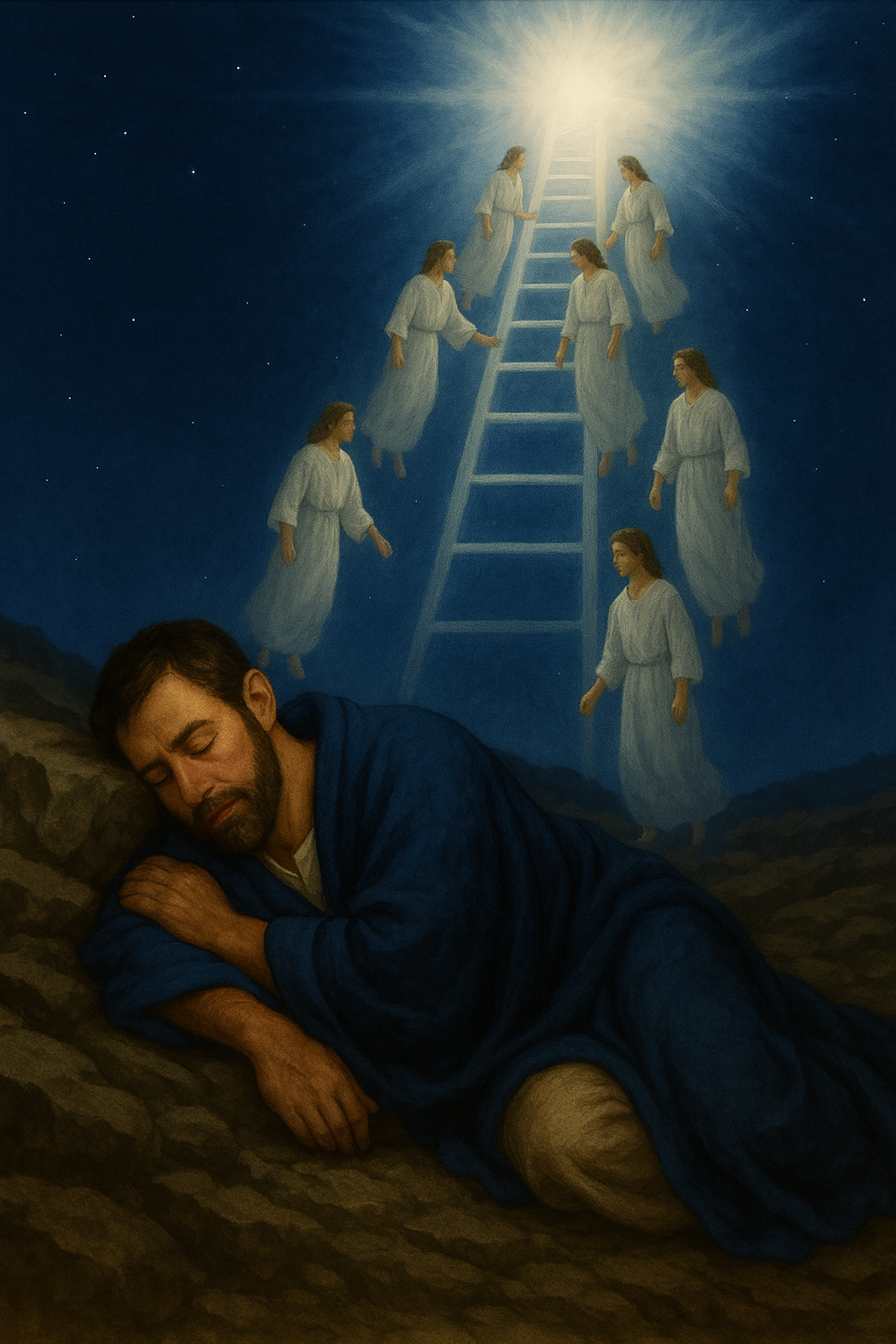
Jacob’s dream is one of the most vivid scenes in the Old Testament. As he slept, he saw a stairway stretching from earth up into heaven, with angels moving up and down on it. At the top stood the Lord Himself, speaking words Jacob had desperately needed to hear but never expected: “I am with you. I will watch over you wherever you go. I will bring you back to this land. I will not leave you.” These promises were not given because Jacob had earned them. They came because God is faithful even when we are stumbling, deceptive, or afraid. Jacob did not climb toward God — God came down toward Jacob.
To truly appreciate this moment, it helps to understand a bit of cultural background. In the ancient world, people built tall temple towers called ziggurats because they believed the gods lived far above and needed help coming down. Stairs or ramps on these structures symbolized a meeting place between the divine and human realms. But Jacob’s dream shows something radically different. This time, the “stairway” is not built by humans trying to reach God. It is built by God Himself, descending to meet a sinner on the run. Jacob had been grasping and scheming all his life. Now he is confronted with the truth that the only real connection between heaven and earth must come from God’s initiative, not human effort.
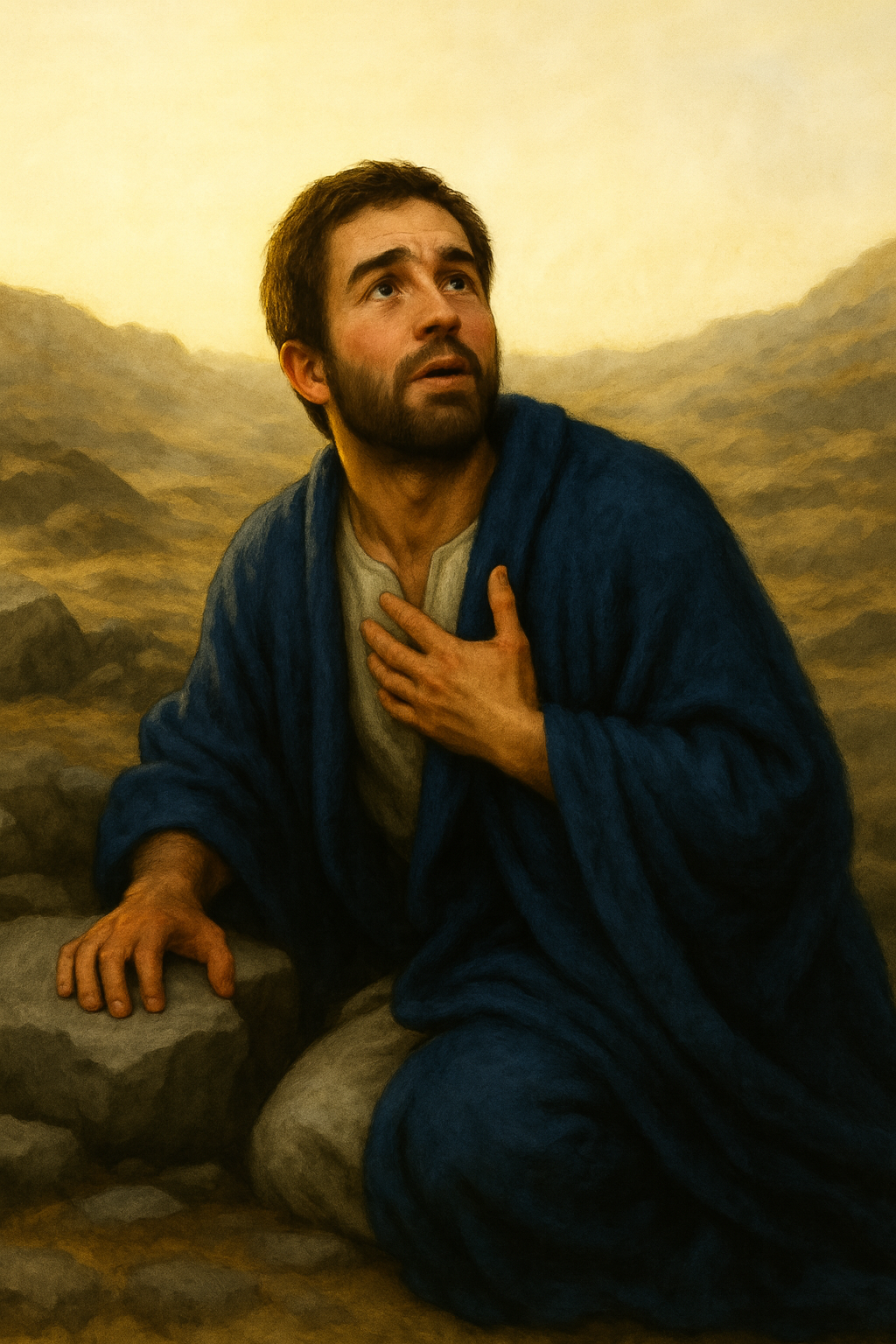
Jacob wakes in awe, whispering to himself, “Surely the Lord is in this place, and I did not know it.” He looks around at the rocky ground he used as a bed, at the sky he slept under, at the loneliness he carried, and suddenly everything feels different. The place is unchanged, but Jacob is changed because God revealed what Jacob could not see: heaven is not far away; God is not silent; and the presence of the Lord can meet us in the most unexpected places.
This story does more than comfort Jacob. It points forward to something far greater. Centuries later, Jesus drew directly from Jacob’s dream when He told His disciples, “You will see heaven open, and the angels of God ascending and descending on the Son of Man” (John 1:51). Jesus was saying plainly and beautifully: “I AM the stairway. I AM the connection between heaven and earth.” Jacob saw the symbol; Jesus revealed the reality. The bridge Jacob glimpsed in a dream is fulfilled in the Person of Christ.
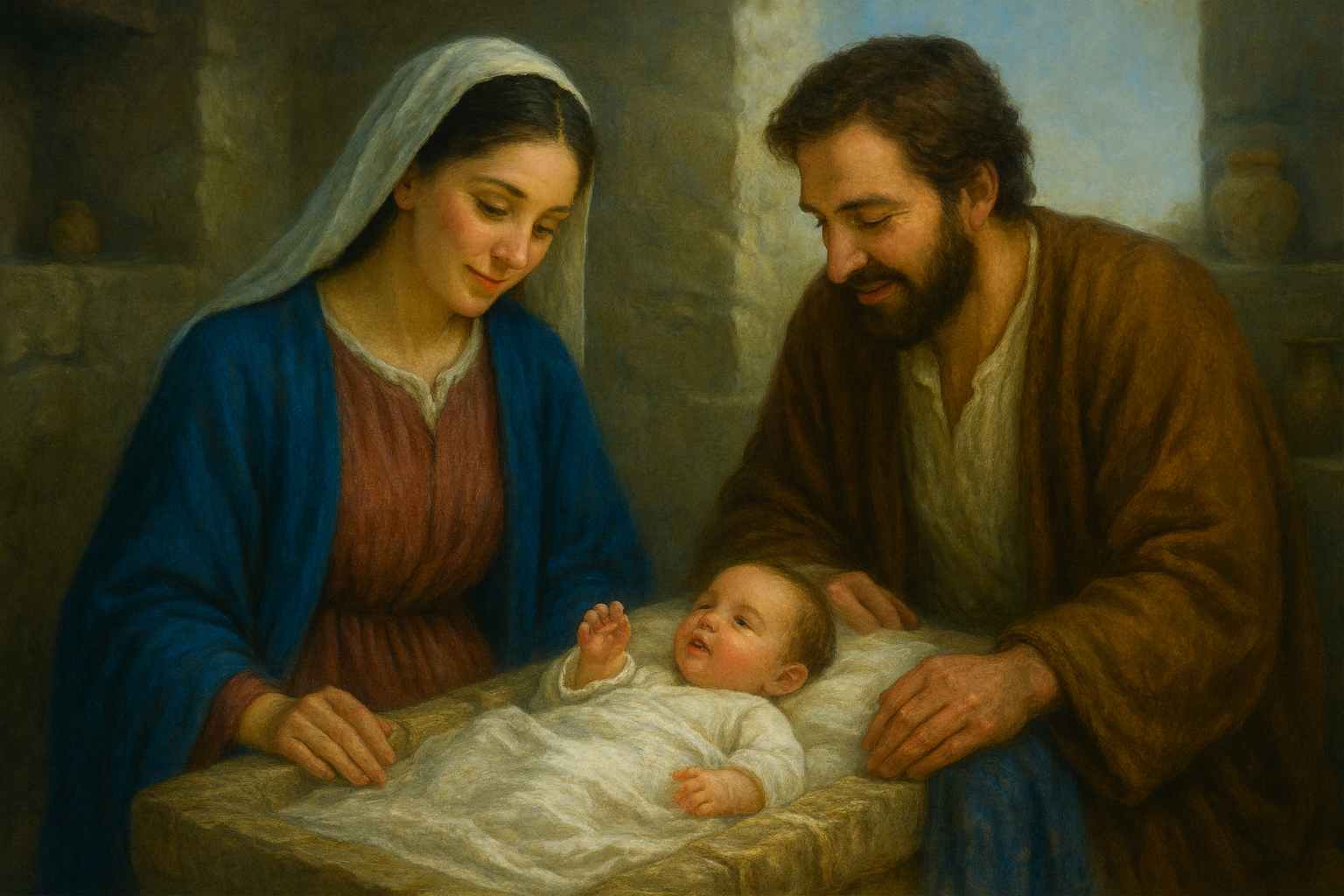
And as we move closer to Christmas, this connection becomes even more meaningful. The real “stairway” did not appear to Jacob in Bethlehem — it came centuries later, wrapped in cloth and laid in a manger. The Son of God stepped down from glory into our world, not in a vision but in flesh and blood. The God who spoke to Jacob in the wilderness came to dwell among us physically, walking our roads, knowing our fears, and bringing heaven near enough to touch.
Jacob’s story invites us to consider our own moments of uncertainty. Do you ever feel far from God? Do you ever wonder whether He sees you or has a plan for you? Do you find yourself longing for reassurance — for some sign that heaven is not closed and that God has not forgotten you? Jacob wasn’t seeking God when the dream came. He was running, afraid, exhausted, and unsure of what lay ahead. But God met him right there — not in a temple, not in a moment of strength, but in vulnerability.
In the same way, God meets us in our ordinary places, our anxious thoughts, and our hidden uncertainties. The message is the same: God builds the bridges we cannot build. He reaches toward us long before we know how to reach toward Him. He is nearer than we feel, working in ways we cannot yet see, and faithful in ways we have not yet imagined.
Jacob rose from his sleep with a new awareness: “Surely the Lord is in this place.” May that truth settle into your heart this week. Wherever you are in your journey — overwhelmed, beginning again, trying to find your way, or simply feeling the distance — the God who came down the ladder to Jacob, and the God who came down to Bethlehem for us, is still reaching toward you today.
SUNDAY BIBLE TEACHING OUTLINE
Jacob’s Ladder — Genesis 28
I. Introduction: A Bridge Between Two Worlds
Have you ever wished there were a bridge between heaven and earth?
A way to know God sees you, reaches for you, and is near?
Jacob’s story shows us a God who comes close, not a God who waits for us to climb up.
II. Jacob’s Situation: Running, Afraid, and Alone
Jacob deceived his brother and fled his home.
He is physically tired, spiritually uncertain, and emotionally unsettled.
He lies down under the open sky with only a stone for a pillow (Gen. 28:10–11).
Even here, God meets him.
III. The Dream God Gave Jacob
A. The Stairway (Ladder) Appears
A stairway stretches from earth into heaven.
Angels move up and down.
Jacob sees a connection between realms.
“And he dreamed, and behold, there was a ladder set up on the earth, and the top of it reached to heaven. And behold, the angels of God were ascending and descending on it.”
—Genesis 28:12 (ESV)
B. God Speaks From Above the Ladder
God identifies Himself and repeats His covenant promises.
“I am the Lord, the God of Abraham your father and the God of Isaac.”
—Genesis 28:13a
God gives Jacob seven assurances:
“The land on which you lie I will give to you and to your offspring.”
“Your offspring shall be like the dust of the earth.”
“In you and your offspring shall all the families of the earth be blessed.”
“Behold, I am with you.”
“I will keep you wherever you go.”
“I will bring you back to this land.”
“I will not leave you until I have done what I have promised you.”
—Genesis 28:13–15 (selections)
IV. Jacob’s Response
Jacob awakens, overwhelmed by God’s presence.
“Surely the Lord is in this place, and I did not know it.”
—Genesis 28:16
His fear turns to reverence.
His loneliness turns into assurance.
His uncertainty becomes hope.
V. BIG IDEA
God showed Jacob a ladder between heaven and earth.
God Himself creates the connection—He comes down to meet us.
VI. Cultural and Biblical Insight
In the ancient world, temples and towers rose upward, symbolizing humanity's attempt to ascend to the gods.
Jacob’s dream reverses this:
God is the One who reaches down.
The connection begins with Him, not with us.
The ladder symbolizes divine initiative and grace.
VII. Pointing to Jesus: The True Ladder
Jesus directly references Jacob’s dream in John 1:51.
“Truly, truly, I say to you, you will see heaven opened, and the angels of God ascending and descending on the Son of Man.”
—John 1:51 (ESV)
Jesus is saying:
He is the true connection.
He is the bridge.
He is the meeting place of heaven and earth.
The dream becomes reality in Christ.
VIII. Application for Today
Like Jacob, we sometimes run, fear, hide, or wonder where God is.
God meets us in unexpected places—on our hardest nights and in our loneliest moments.
A. Questions for Reflection
Where do you feel far from God right now?
Where do you need to remember His promise, “I am with you”?
What “stone pillow” nights has God used to show you that He is near?
B. Key Truths to Take Home
God comes to us in grace, not because we are perfect.
God builds the bridge we cannot build.
God is nearer than we feel.
Jesus is the ladder Jacob saw.
IX. Closing Encouragement
Jacob walked away from that night changed because God met him where he was.
May you also know today that the Lord is in this place.
Through Jesus Christ, heaven has drawn near, and the God who came down the ladder still comes close to His people.
