
Two Nations, One Womb: Jacob and Esau
Genesis 25:19–34

Isaac and Rebekah had been married for many years, and the home they built together was filled with love, but also an ache they could never quite escape. They longed for children, yet none came. Month after month, year after year, hope became quieter. But Isaac did not give up. He prayed earnestly for Rebekah, interceding for the blessing God had once given his own parents.
God heard Isaac’s prayer, and Rebekah conceived. Their joy must have been overwhelming at first. But the joy quickly turned to fear. Her pregnancy was not normal. The movements inside her body weren’t gentle or rhythmic—they were harsh, painful, and alarming. It felt like something was wrong, something she couldn’t understand or describe.
Finally, in her distress, Rebekah cried out to the Lord. Scripture captures her voice with raw honesty:
“If all is well, why am I like this?”
(Genesis 25:22, NKJV)

God answered her directly. He revealed that she was carrying twins, but these were no ordinary brothers. Their struggle inside her body was a sign of the future conflict between them—tension that would grow into the destinies of two nations. God told her:
“Two nations are in your womb…
One people shall be stronger than the other,
And the older shall serve the younger.”
(Genesis 25:23, NKJV)
This was a breathtaking prophecy—a glimpse into a plan much larger than one family. Rebekah’s body was the first place this struggle appeared, but the real battle would unfold in the generations that followed.
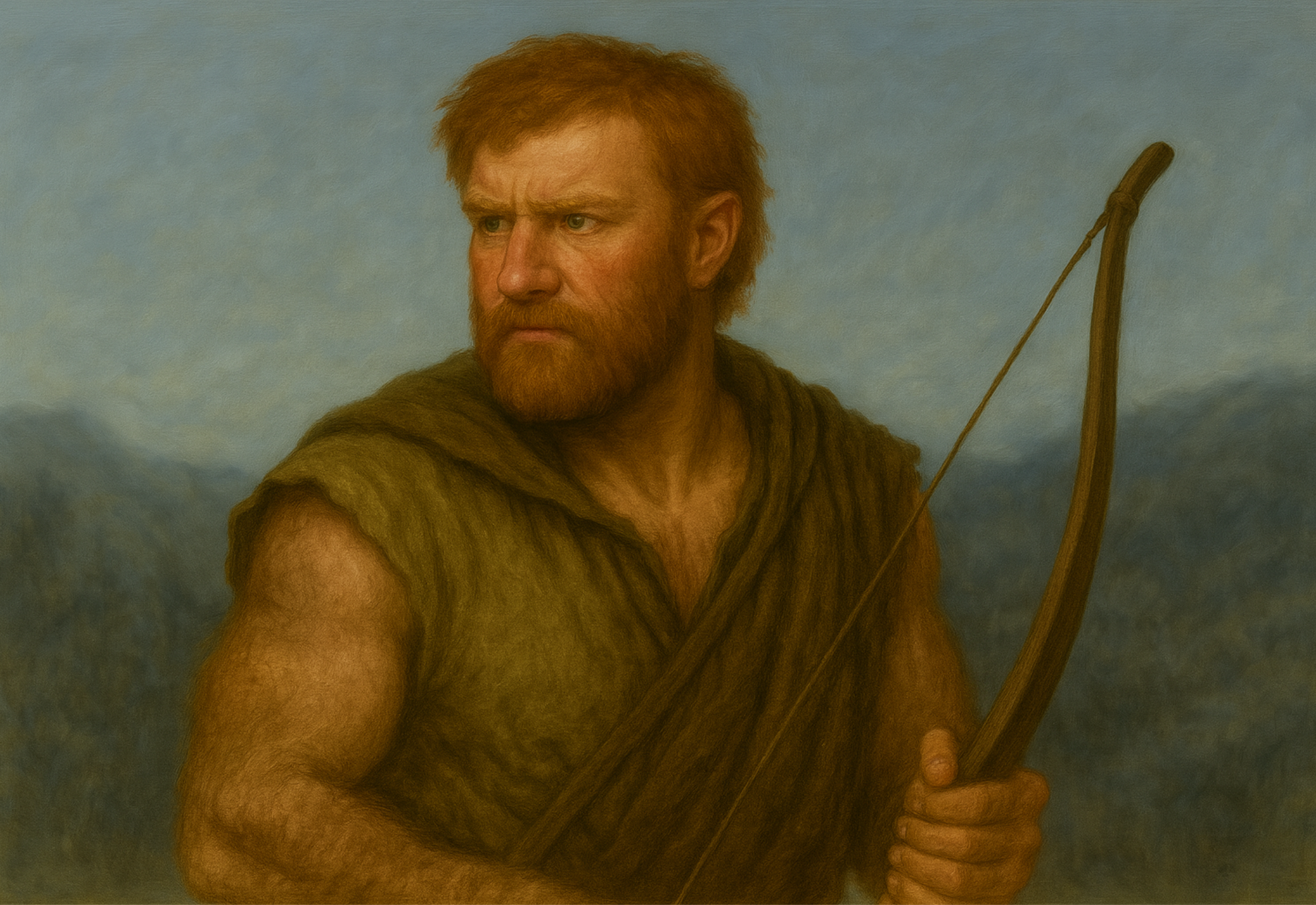
When the time came for the twins to be born, the differences between them were evident from the start. The first baby came out red and covered with hair, so they named him Esau—“hairy.” The second baby emerged with his hand gripping Esau’s heel, so they named him Jacob—“heel-grabber,” a name that hinted at striving, grasping, and wrestling for blessing.
As the boys grew, their personalities moved in opposite directions. Esau became a man of the outdoors—active, impulsive, strong, and always hungry. He loved the hunt and lived for the moment. Jacob stayed close to home—quieter, observant, thoughtful, and strategic. He paid attention to details and watched for opportunities.
One son lived by appetite.
One lived by intention.
One ran through open fields.
One stayed near the tents.
Inside the same home lived two remarkably different hearts.

One day, Esau came home from hunting exhausted and starving. His impatience for food made him careless, and his hunger seemed bigger to him than anything else. Jacob was cooking lentil stew—a simple meal with a rich scent drifting through the tent.
Esau demanded some. Jacob responded with a bold request: the birthright. In their culture, this was no small thing. The birthright represented:
leadership of the family
a double portion of the inheritance
The spiritual blessing passed down from Abraham's
stewardship of God’s covenant promises
It was sacred, weighty, and tied to God’s unfolding plan.
But Esau didn’t value spiritual things. He valued the moment. The bowl of stew mattered more to him than the future God had offered him. In a single careless decision, he swore an oath and traded what was eternal for what was immediate.
Jacob’s actions weren’t admirable—he took advantage of a weak moment—but Esau’s heart posture revealed something even more profound. He treated the sacred lightly. Appetite won over destiny.

Jacob and Esau became symbols of two paths of living.
Esau’s path was guided by impulse, appetite, and the temporary.
Jacob’s path, though flawed, reached toward God’s promises.
The struggle Rebekah felt inside her womb didn’t end at birth. The wrestling continued in their personalities, their priorities, and their futures. And the same kind of tension often wrestles inside our own hearts—between what is easy and what is right, between what satisfies the moment and what lasts forever.
This story is not told so we can admire one brother and reject the other. It is given so we recognize that:
God’s purposes are bigger than our emotions
God works even through human flaws
His plan is full of mystery, mercy, and sovereign love
And even when people choose poorly, God’s story continues to unfold exactly as He intends.
God sees the whole story—even when we don’t. His purposes unfold through our struggles, our differences, and even our flawed decisions. He is faithful across generations.
Jacob and Esau wrestled for the blessing.
Jacob grasped. Esau despised.
Both failed in different ways.
But later, God would send a true Firstborn, Jesus Christ—the One who held the full inheritance of heaven.
And instead of grasping for more blessings or trading them away…
Jesus chose to share His inheritance freely with all who come to Him.
Where Jacob schemed, and Esau surrendered,
Jesus redeems.
He is the Firstborn who invites us to become children of God and partakers in His endless grace.
TEACHING OUTLINE — Bible Study Version
I. The Family Line and God’s Faithfulness
Genesis 25:19–21
Isaac is the covenant son through Sarah
Rebekah’s barrenness mirrors Sarah’s
Isaac prays persistently
God opens Rebekah’s womb
Teaching Notes:
God continues His covenant through prayer and promise
Faithful intercession is part of God’s unfolding plan
Delays are not denials—God works in waiting seasons
II. Rebekah’s Distress: The Struggle Within
Genesis 25:22
Painful, confusing pregnancy
Rebekah seeks the Lord directly
Her question reveals fear and faith
Teaching Notes:
Emotional honesty before God is encouraged
Spiritual struggle often begins before the outward story unfolds
God invites us to bring confusion to Him
III. The Prophecy: Two Nations, Two Roads, Two Futures
Genesis 25:23
God reveals the boys’ destinies
“The older shall serve the younger.”
God’s sovereignty overturns human expectations.
Teaching Notes:
God’s purposes do not follow human order
“Strength” in Scripture often refers to spiritual legacy, not physical might
The struggle in the womb is a picture of the battle in life
IV. The Birth Story: Clues to Their Character
Genesis 25:24–26
Esau: red, hairy, strong
Jacob: grasping the heel
Early signs of differences in nature and temperament
Teaching Notes:
Scripture uses birth images to hint at future patterns
God sees character long before humans do
V. Two Sons, Two Values
Genesis 25:27–28
Esau: impulsive, outdoors, appetite-driven
Jacob: quiet, thoughtful, strategic
Parental favoritism introduces family tension
Teaching Notes:
Differences in personality are not moral differences
Favoritism complicates God’s design for family unity
Each child carries strengths and weaknesses
VI. The Birthright: A Window into Their Hearts
Genesis 25:29–34
Esau’s hunger leads to careless choices
Jacob’s opportunism reveals immaturity
Esau despises the spiritual blessing
The birthright points toward covenant responsibility
Teaching Notes:
Appetite vs. calling
Immediate vs. eternal
Trading God’s promises for momentary comfort
VII. Human Choices and Divine Sovereignty
God works through imperfect people
Human failure does not stop divine purpose
God will shape Jacob’s flaws in future chapters
Esau’s choices reveal a heart uninterested in spiritual things
Teaching Notes:
God sees the end from the beginning
Divine choices do not cancel human responsibility
The story of the twins shows tension between grace and character
VIII. Christ the True Firstborn
Colossians 1:15–18
Jesus is the Firstborn over all creation
He holds the full inheritance of heaven
Unlike Jacob and Esau, He shares His inheritance
Teaching Notes:
Jesus fulfills what the birthright symbolized
Christ gives what others grasp for
Believers receive blessings by grace, not by birth order
