
Joseph’s Story — When God Turns Brokenness into Blessing
Genesis 37–50
Have you ever lived through something painful, only to look back years later and realize God was doing something through it all — even when you couldn’t see it? That is Joseph’s story. It is one of the most sweeping and breathtaking narratives in the Old Testament, weaving together family conflict, betrayal, injustice, faithfulness, and redemption. Joseph’s life is a masterclass in how God can take the darkest threads and weave them into something good.
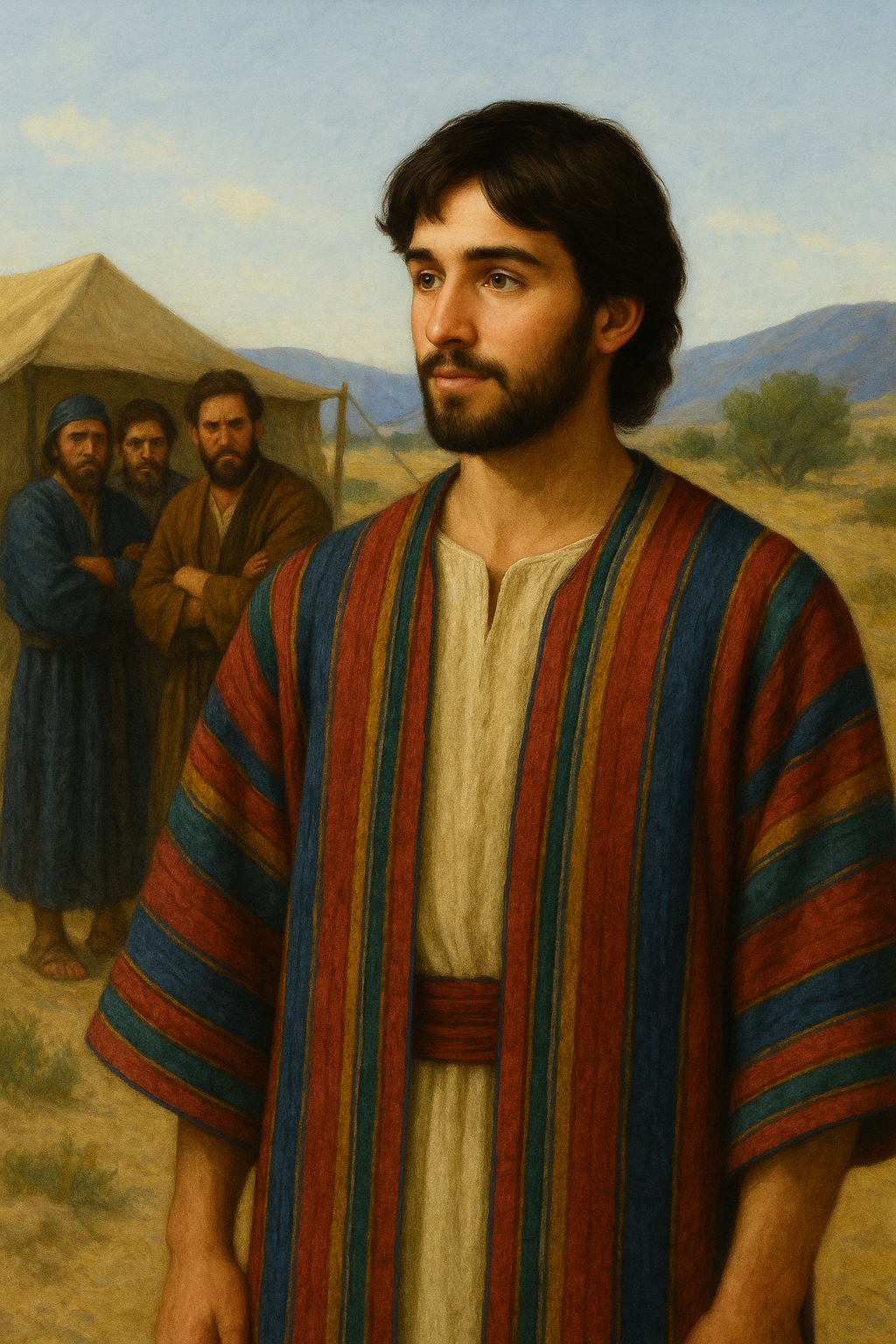
Joseph was one of twelve sons born to Jacob. He wasn’t the oldest, the strongest, or the most likely leader. But he was the firstborn son of Jacob’s beloved wife Rachel, and Jacob openly favored him. As a sign of affection, Jacob gave Joseph a special coat — a long, colorful robe that made him stand out.
To Joseph, the robe was a gift of love.
To his brothers, it was a reminder that Joseph was the one their father preferred.
Joseph didn’t help matters when he began having unusual dreams — dreams that hinted he would one day rise to a place of authority, and that his brothers would bow before him. Whether he understood the meaning or not, Joseph told his brothers about the dreams. Already jealous, they grew to hate him.
What started as quiet resentment slowly hardened into something far more dangerous.
One day, Jacob sent Joseph to check on his brothers as they tended the flocks far from home. When the brothers saw Joseph approaching in his colorful coat, the bitterness they had bottled up finally overflowed.
“Here comes the dreamer,” they mocked.
What followed was one of the darkest moments in Joseph’s life — and in the history of this family.
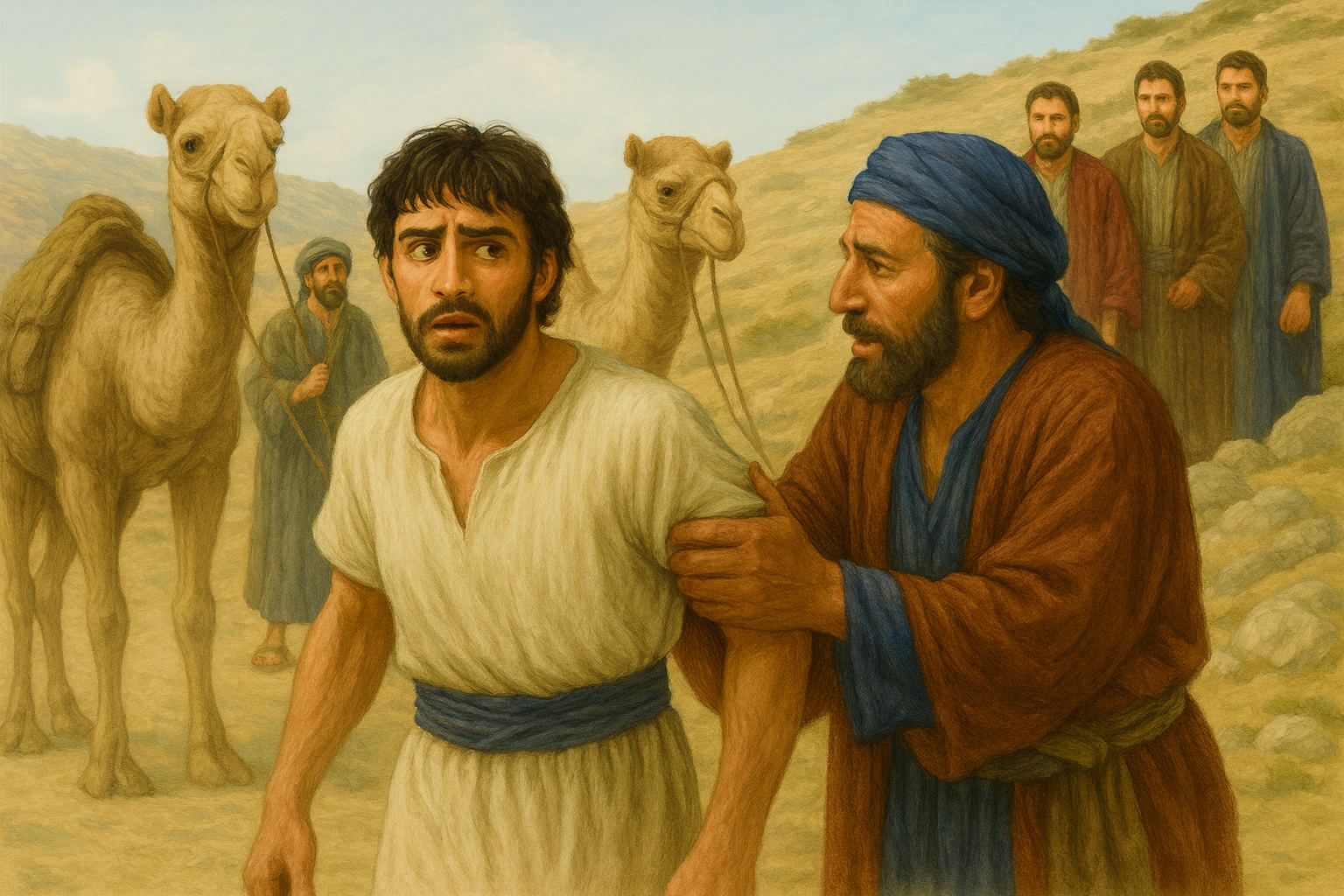
The brothers seized Joseph, stripped off his precious coat, and threw him into a dry pit. At first, some wanted to kill him. But instead, when a caravan of merchants passed by on the way to Egypt, they sold Joseph as a slave.
With Joseph gone, they soaked his coat in animal blood and presented it to Jacob. Believing his son had been killed by a wild animal, Jacob’s heart shattered. He mourned deeply, and refused all comfort.
Meanwhile, Joseph was carried far from the land he knew, into a foreign world with a foreign language and foreign gods. Everything familiar was gone. Yet God had not left him.
In Egypt, Joseph was sold to Potiphar, an official in Pharaoh’s court. This could have been the end of the story — a forgotten Hebrew slave in a vast empire. But Scripture says something vital:
“The Lord was with Joseph.”
Those words become the quiet anchor of Joseph’s life.
God gave Joseph favor. He worked diligently, learned quickly, and acted with integrity. Soon Potiphar trusted him so much that Joseph was placed in charge of his entire household.
It seemed, for a moment, that life was stabilizing.
But another storm was coming.
Potiphar’s wife noticed Joseph. Day after day she tried to lure him into sin. Joseph refused her advances, saying, “How then can I do this great wickedness and sin against God?” He wasn’t just trying to avoid trouble — he was choosing faithfulness.
One day, when Joseph again refused her, she grabbed his garment and screamed, falsely accusing him. Potiphar believed her, and Joseph was thrown into prison — another betrayal, another injustice, another dark turn in a life that seemed to be unraveling.
Yet even here, the Scripture repeats it:
“The Lord was with Joseph.”
In the dimness of a prison cell, Joseph remained faithful. God gave him favor with the prison keeper, who eventually placed Joseph in charge of the other prisoners. Joseph served, watched, listened, and waited.
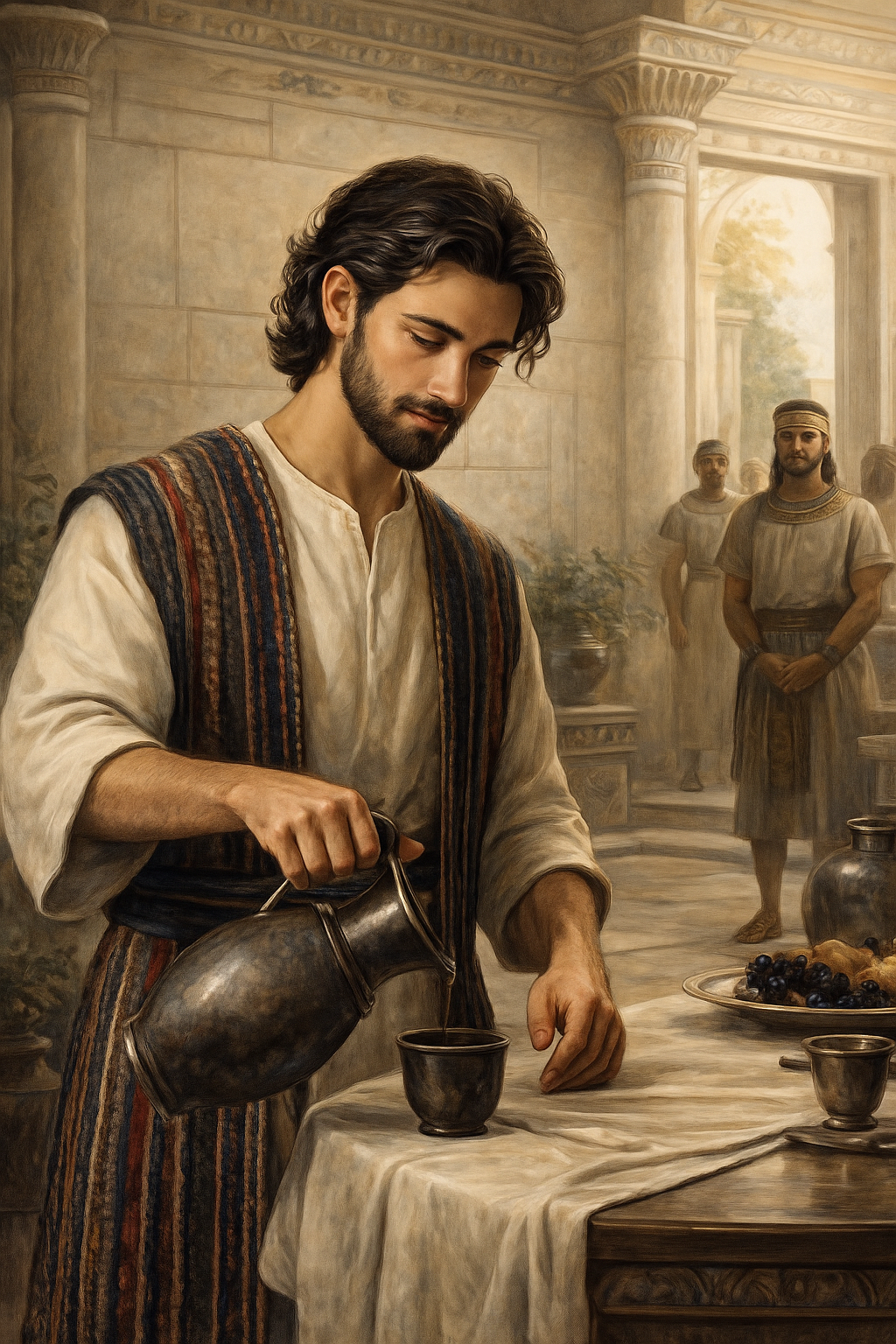
While Joseph was in prison, two of Pharaoh’s servants — the cupbearer and the baker — were imprisoned as well. Each had troubling dreams, and Joseph, with God’s help, interpreted them accurately. The cupbearer would be restored to his position; the baker would not.
Joseph asked the cupbearer, “Remember me when it is well with you.”
But when the cupbearer returned to Pharaoh’s court, he forgot Joseph entirely.
Two more years passed. Joseph remained faithful, but must have wondered how long this chapter would last.
One night, Pharaoh had two disturbing dreams — visions of cows and grain that none of his wise men could explain. Only then did the cupbearer remember Joseph.
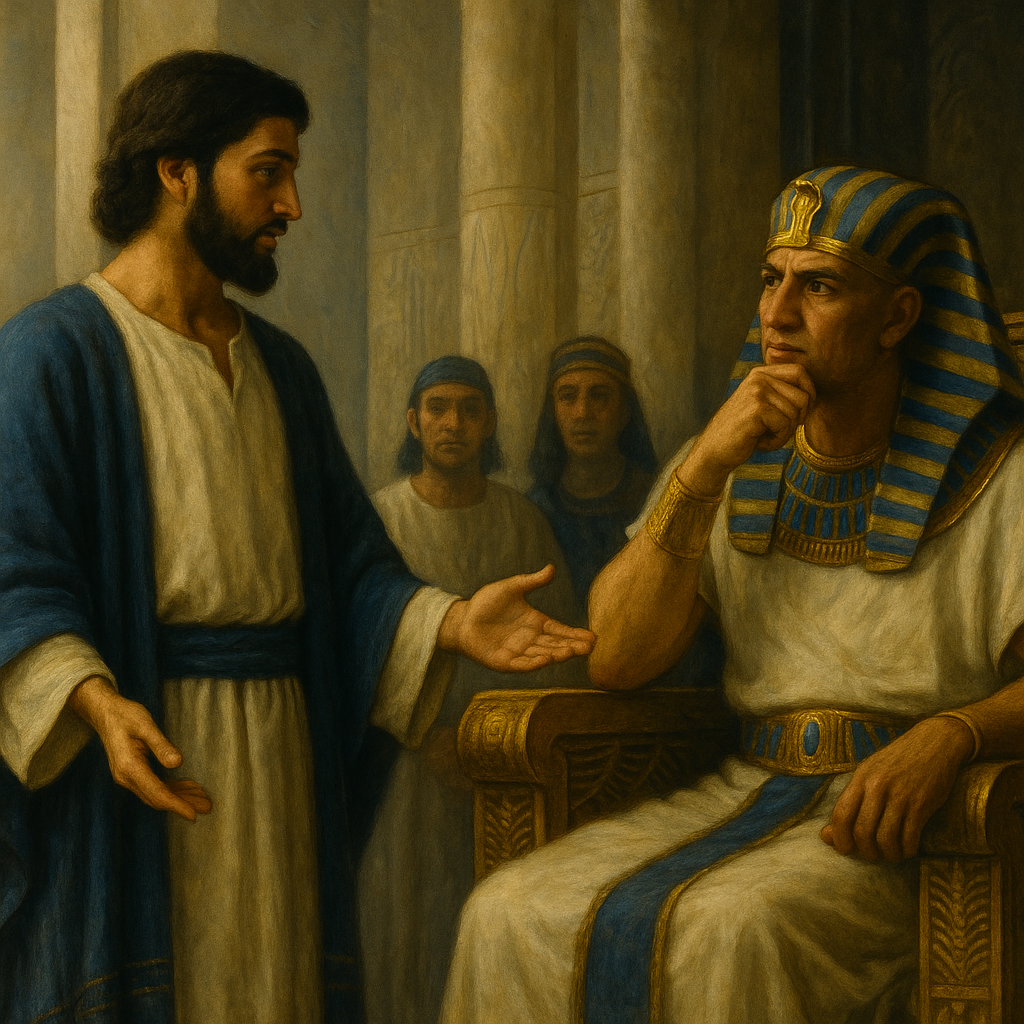
Joseph was brought from the prison, quickly washed, shaved, and presented before the king of Egypt. Pharaoh demanded an interpretation.
Joseph made something clear:
“I cannot do it… but God will give Pharaoh the answer.”
Through Joseph, God revealed that the dreams were a warning. Seven years of abundance would be followed by seven years of severe famine. Pharaoh was so impressed by Joseph’s wisdom that he appointed him second in command over all Egypt — a position of enormous authority.
From pit to palace, from slave to ruler — God had been steering every chapter of Joseph’s life toward this moment.
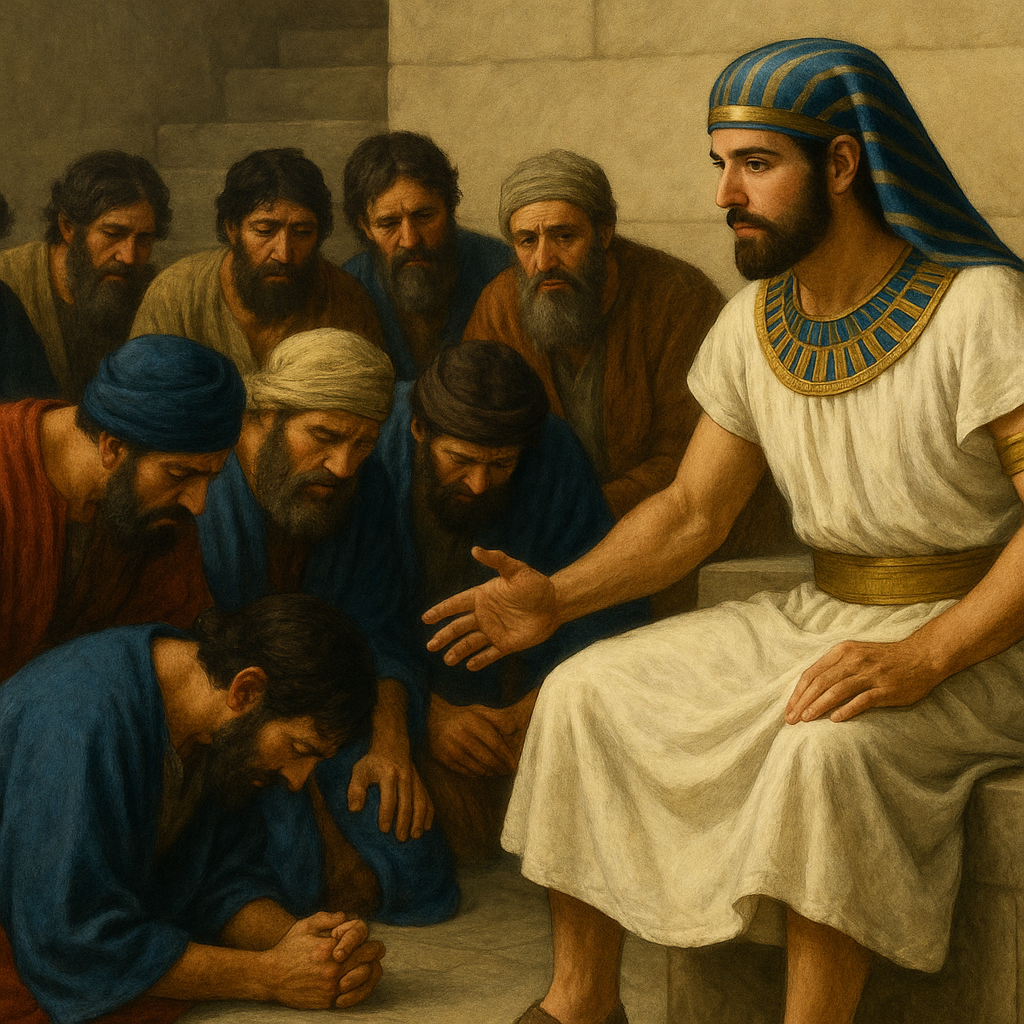
When the famine struck, it reached as far as Canaan. Jacob, believing Joseph long dead, sent his sons to Egypt to buy food. They bowed before Joseph — not recognizing him as the brother they had betrayed. Joseph recognized them immediately.
Through a series of encounters, Joseph tested their hearts. Had they changed? Were they still the same jealous brothers who once sold him?
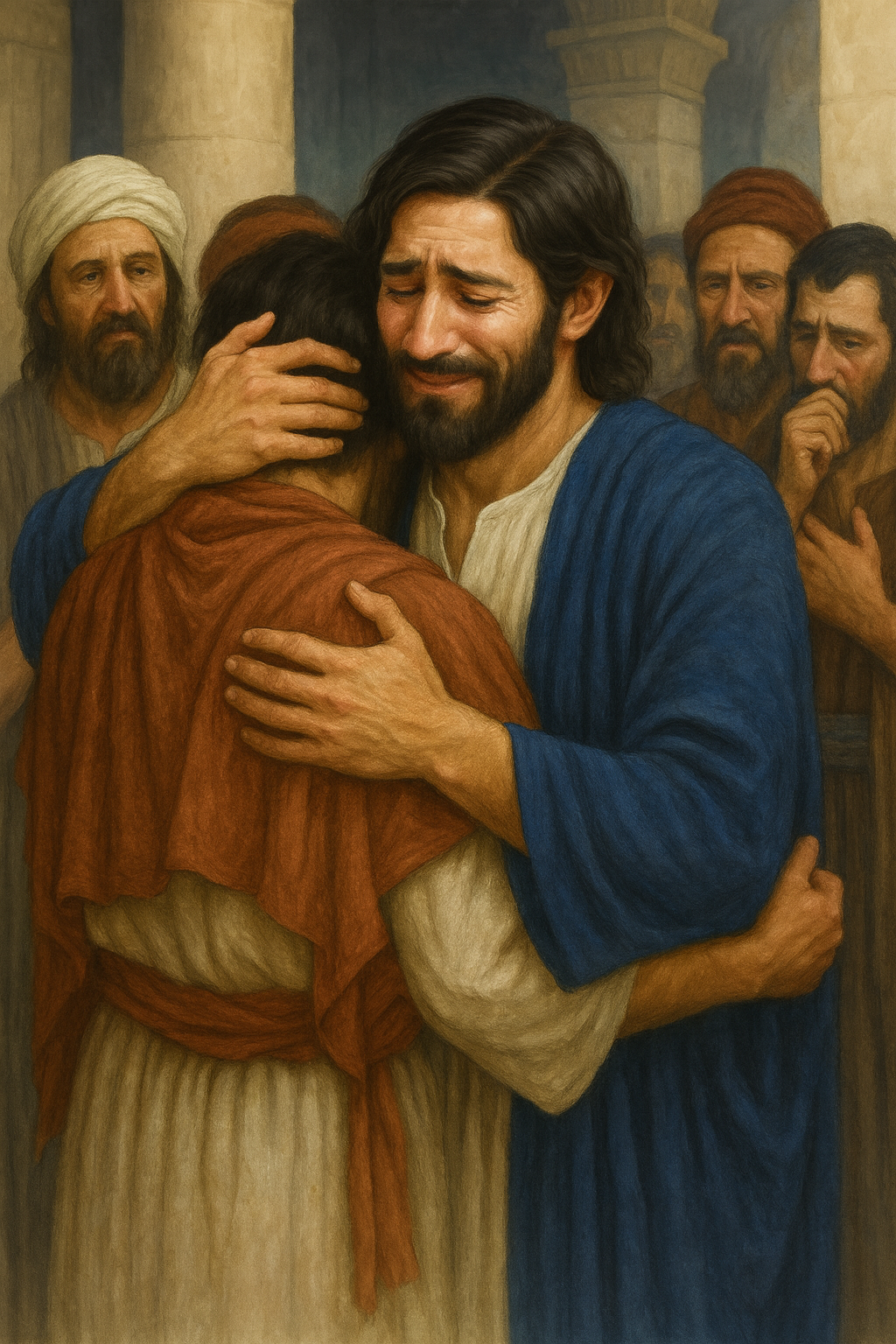
When he finally saw their repentance and sorrow, Joseph could no longer contain his emotion. In one of the most moving scenes in Scripture, Joseph revealed himself:
“I am Joseph… Is my father still alive?”
His brothers were speechless, struck with fear. But instead of anger, Joseph offered forgiveness.
“You meant evil against me, but God meant it for good.”
He embraced them, wept with them, and provided for them. The family was restored. Their future — and the future of God’s covenant people — was secure once more.
Every painful piece of Joseph’s life had been stitched into a larger pattern:
Betrayal brought him to Egypt.
Slavery placed him in Potiphar’s house.
False accusation placed him in prison.
Prison placed him before Pharaoh.
Pharaoh placed him over the nation.
That position allowed him to save countless lives.
Joseph’s suffering became the thread God used to rescue nations.
Joseph’s story is a picture of something far greater.
Jesus, too, was betrayed by His own.
Rejected without cause.
Sold for silver.
Handed over to suffering.
Yet God used the darkest day in history to bring salvation to the world.
Joseph saved many from famine.
Jesus saves us from sin.
Joseph forgave those who wronged him.
Jesus forgives all who come to Him in faith.
Joseph embraced his brothers.
Jesus brings us into the family of God.
Joseph’s story does more than heal a broken family — it lays the foundation for the future nation of Israel. Jacob, Joseph’s father, had twelve sons. These sons became the fathers of the twelve tribes. Their names would shape the entire story that follows in Scripture: Reuben, Simeon, Levi, Judah, Dan, Naphtali, Gad, Asher, Issachar, Zebulun, Joseph, and Benjamin.
Joseph’s situation is unique. Instead of forming one tribe under his own name, Joseph’s two sons — Ephraim and Manasseh — were adopted by Jacob and each became a tribe. This gave Joseph a “double portion,” a sign of honor for the son who preserved God’s people during the famine. Levi, the tribe of priests, would later receive no land inheritance, but still held a sacred place among the tribes.
This simple family story ripples forward through all of Israel’s history. Kings, prophets, judges, and even Jesus Himself are connected to these twelve tribes. Joseph’s forgiveness didn’t just restore his family — it helped secure the covenant line through which God would send the Messiah.
The entire story whispers of the greater Redeemer to come.
Joseph’s life teaches us that no piece of our story is wasted. God uses the painful, the confusing, and the unexpected to weave a pattern we cannot yet see. And through Jesus, the greater Joseph, we learn that God is still turning suffering into salvation and brokenness into beauty.
SUNDAY BIBLE TEACHING OUTLINE
Joseph’s Story — When God Turns Brokenness Into Blessing
Genesis 37–50
I. Introduction — When Life Doesn’t Make Sense
Have you ever lived through something painful and only later realized God was using it for good?
Joseph’s life teaches us that God is at work even in the broken pieces of our story.
II. Joseph the Beloved Son (Genesis 37)
Joseph is deeply loved by his father Jacob.
Jacob gives him a long, colorful robe.
Joseph has two dreams that suggest he will one day rise above his brothers.
His brothers grow jealous, resentful, and hostile.
“They hated him even more because of his dreams and his words.”
Genesis 37:8
III. Betrayed and Sold (Genesis 37:12–36)
Jacob sends Joseph to check on his brothers in the fields.
The brothers seize him, strip his robe, and throw him into a pit.
They sell him to passing merchants on their way to Egypt.
They deceive Jacob by showing him Joseph’s bloodied robe.
Jacob mourns deeply, believing Joseph is dead.
IV. Joseph in Potiphar’s House (Genesis 39)
Joseph is sold to Potiphar, an Egyptian official.
God blesses Joseph, and he rises to oversee Potiphar’s household.
“The Lord was with Joseph, and he became a successful man.”
Genesis 39:2
Potiphar’s wife falsely accuses Joseph after he refuses her advances.
Joseph is imprisoned for a crime he did not commit.
V. Faithful in Prison (Genesis 39:20–23)
Even in prison, God remains with Joseph.
Joseph is placed in charge of the other prisoners.
He interprets dreams for Pharaoh’s cupbearer and baker.
The cupbearer is restored — but forgets Joseph.
“Yet the chief cupbearer did not remember Joseph, but forgot him.”
Genesis 40:23
VI. Joseph Stands Before Pharaoh (Genesis 41)
Two years later, Pharaoh has troubling dreams.
The cupbearer finally remembers Joseph.
Joseph is brought from the prison to interpret Pharaoh’s dreams.
God reveals that seven years of abundance will be followed by seven years of famine.
Pharaoh appoints Joseph second-in-command over all Egypt.
“Only as regards the throne will I be greater than you.”
Genesis 41:40
VII. Famine and Reunion (Genesis 42–45)
The famine reaches Canaan.
Joseph’s brothers come to Egypt for food — not recognizing him.
After testing their hearts, Joseph reveals himself.
“I am your brother Joseph, whom you sold into Egypt.”
Genesis 45:4
Joseph forgives them with compassion.
The family is restored, and Jacob rejoices when he learns Joseph is alive.
VIII. Joseph’s Powerful Statement (Genesis 50:20)
After Jacob’s death, the brothers fear Joseph will seek revenge.
But Joseph affirms God’s sovereignty over every part of his story.
“You meant evil against me, but God meant it for good,
to bring it about that many people should be kept alive.”
Genesis 50:20
Joseph recognizes God’s hand even in the darkest events.
IX. BIG IDEA
God used Joseph’s suffering for salvation.
Nothing is wasted in the hands of God.
X. Pointing to Jesus — The Greater Joseph
His brothers betrayed Joseph.
Jesus was betrayed by one of His disciples.
Joseph was wrongly accused.
Jesus was falsely condemned.
Joseph suffered so others might live.
Jesus gave His life so the world might be saved.
Joseph forgave those who hurt him.
Jesus forgives all who come to Him in faith.
Joseph saved nations from famine.
Jesus saves us from sin and death.
XI. Application — When Our Story Breaks
A. Where are the broken pieces in your life?
Moments that feel wasted
Seasons of injustice
Times when God’s silence stings
B. What Joseph’s story teaches us:
God is present even when we cannot feel Him.
God weaves purpose through suffering.
God redeems what others intend for harm.
God’s timing is perfect, even when delayed.
Jesus is the fulfillment of Joseph’s story of redemption.
XII. Closing Encouragement
Joseph saw the purpose only years later — but God was working long before Joseph understood.
The same God holds your story.
Nothing is wasted.
God is still turning suffering into salvation and brokenness into beauty.
