
Can This Marriage Be Saved?
When the Fight Crosses Into Danger

Some marriages can be repaired through grace, patience, and honest work. Others break beneath a weight no spouse was ever meant to carry. When the covenant has been shattered by fear, treachery, and escalating harm, the question isn't “How do we fix this?” but “How do we protect the lives entrusted to us?” This is the story of a young mother who longed to honor her marriage, yet ultimately had to honor something deeper — God’s call to safety, truth, and protection.
She came to church every Sunday with her two little red-haired, freckle-faced children, doing her best to appear composed. Her husband often accompanied her, especially when he knew others were watching, but lately he stayed home more frequently, claiming exhaustion or “spiritual frustration with the church.” To the outside world, he could appear charming and articulate, quick to speak in Bible study and eager to position himself as a serious believer. But at home, a different reality unfolded — one she struggled even to name.
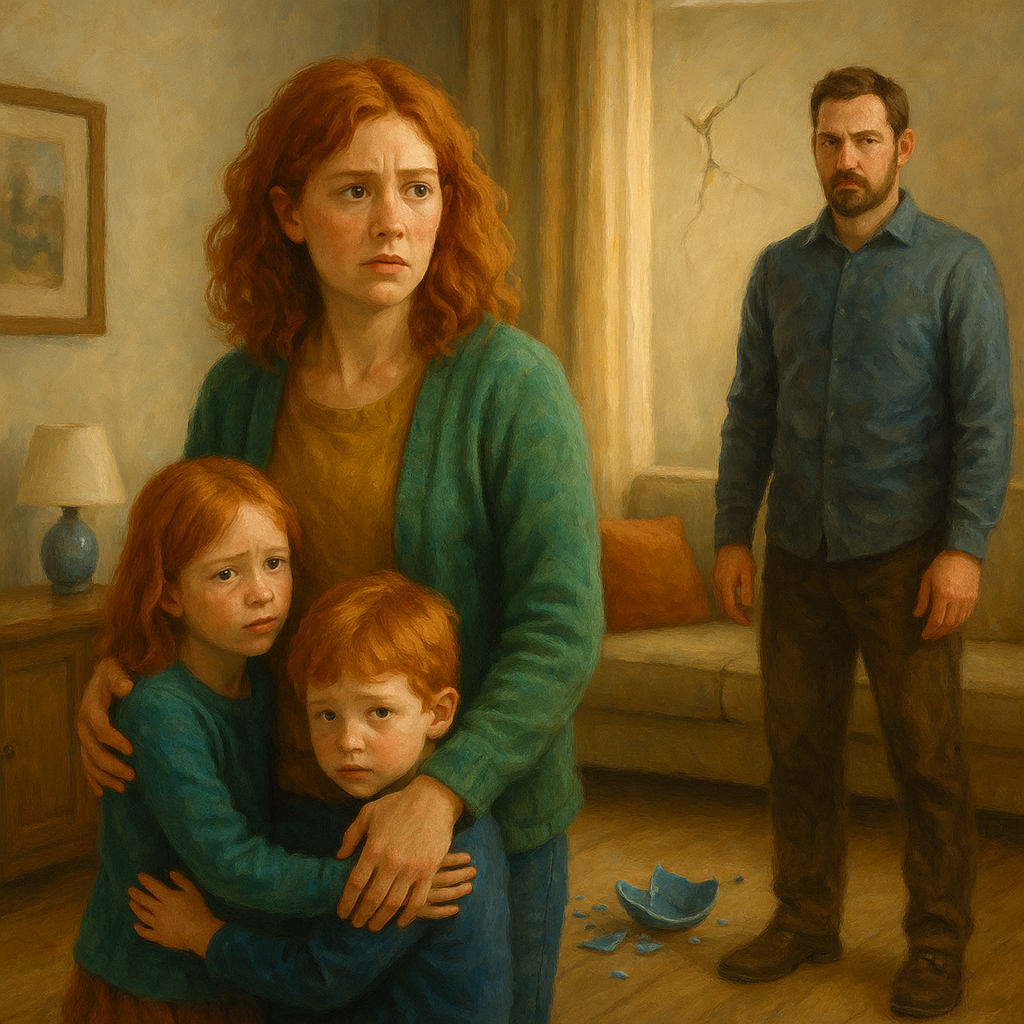
The trouble had begun subtly. At first, he corrected her constantly, insisting she remembered conversations incorrectly or misheard his tone. He questioned her emotions, telling her she was dramatic, unstable, or too sensitive. She began doubting her own perceptions, wondering whether she truly was the problem. Later, his control grew more direct. He took over their finances, told her she was irresponsible with money, and made it increasingly difficult for her to see family or visit friends. When she tried to express concern, he weaponized Scripture — quoting submission passages or accusing her of being an ungodly wife who refused to “respect her spiritual head.”
Though she felt deeply unsettled, she convinced herself it would improve. She prayed harder, tried to be kinder, softened her voice, worked tirelessly to keep the children quiet and the home peaceful. But gentleness does not cure aggression. His frustration escalated into unpredictable outbursts. One evening, after a small disagreement, he grabbed a decorative bowl and hurled it across the room. It smashed against the far wall, startling the children so badly that they burst into tears. He insisted the incident was her fault — she had “pushed him too far.” She swept up the shards alone, her hands trembling, trying to hide her fear from the little ones clinging to her legs.

But the true turning point came weeks later.
They were arguing quietly at first, the children playing in the next room. She had gently asked if they could revisit a financial decision he made without consulting her. His face darkened; he stepped closer. She backed away instinctively. Then, in a sudden eruption of rage, he slammed his fist into the wall beside her head — the sound exploding through the hallway. A picture frame crashed to the floor and shattered. Their youngest child came running, terrified, crying, “Mommy!” The moment froze her — not because he had hit her, but because she knew he could have. Because the next strike might not miss.
That night, while tucking the children into bed, her oldest whispered, “Mommy… why is Daddy so mad? Did I make him angry?” The pain of that question settled deep in her spirit. She held him close and assured him he had done nothing wrong, but something inside her broke open. She finally faced the truth she had avoided for too long: her home was no longer safe. Her children were scared. And she was running out of time.
The next Sunday, her husband stayed home again, irritated from the night before. She walked into church with the children, wearing a polite smile that didn’t reach her eyes. The pastor’s wife noticed immediately. She had seen this particular blend of exhaustion, fear, and hesitation before in women who felt trapped. After service, she gently approached her and said, “You seem burdened lately. Would you like to sit and talk for a moment?” Her voice was soft, but the invitation was firm enough to break through the young mother’s last remaining wall of silence.
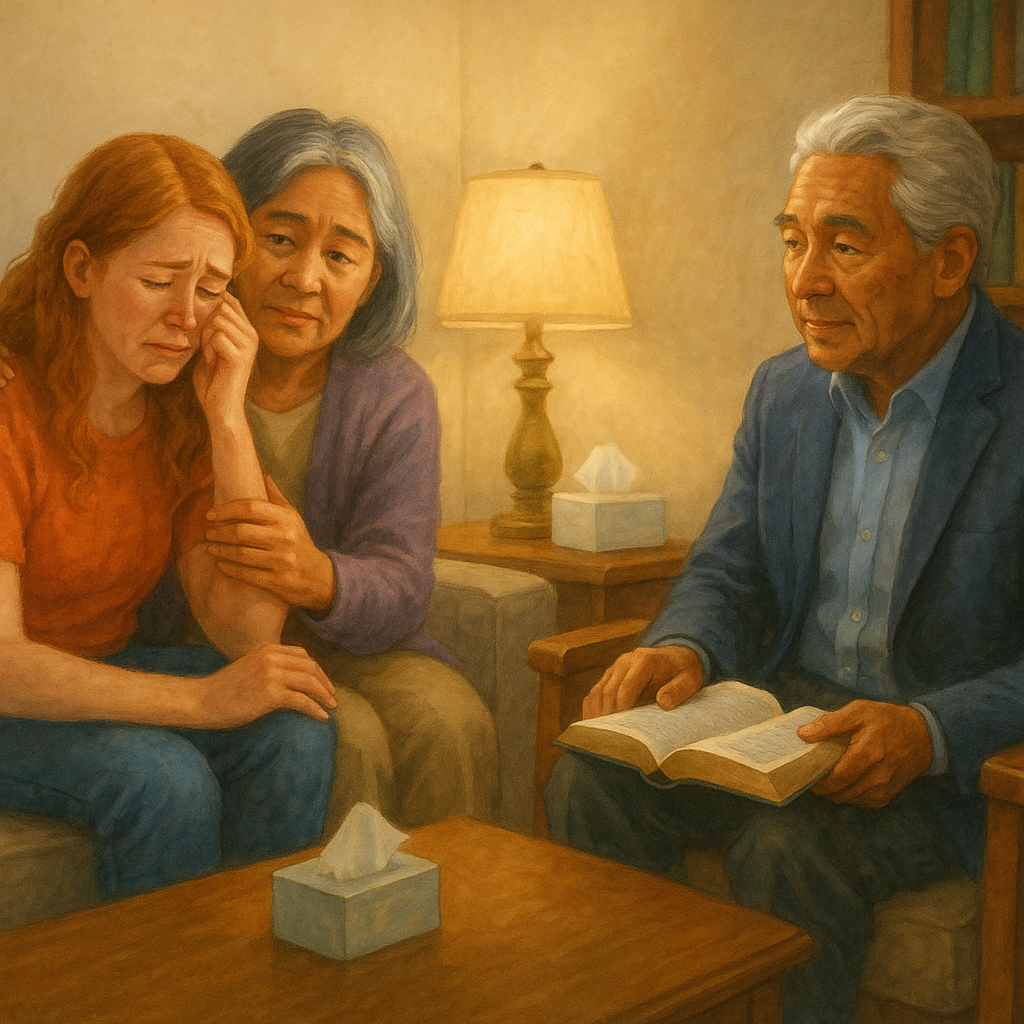
They stepped into a quiet room. At first, she struggled to speak, but as the pastor’s wife held her hand, the truth finally came out — the gas-lighting, the manipulation, the outbursts, the shattered bowl, the fist through the wall. Her voice trembled as she described the children’s fear. By the time she finished, tears streamed down her cheeks.
Later that week, she and the children came for a counseling session with both the pastor and his wife present, creating a safe, supportive environment. He listened patiently, not rushing to conclusions or minimizing her experience. When she finished, he opened his Bible — not to scold her, but to give her clarity she had never been taught.
He turned to Malachi 2 and explained the original Hebrew:
“God hates the man who covers his garment with violence.”
It was not divorced people God condemned — it was the violence and treachery that shattered covenant. Then he walked through 1 Corinthians 7, showing how abandonment is more than someone physically walking out the door; it is a rejection of covenant responsibilities, peace, safety, and love. Her husband’s behavior qualified as emotional abandonment and escalating violence — clear biblical grounds for freedom.
The pastor’s wife leaned closer and said, “What you’re describing is not a marriage problem. This is a safety problem. You have honored your vows. You have prayed faithfully. But your husband’s sin has broken the covenant already — you are not bound to stay in danger.”
With their guidance, she gently crafted a plan. A women’s ministry member offered a temporary place to stay. Trusted believers helped gather essentials discreetly. And one morning, while her husband was away, she quietly packed a few bags, took her children’s hands, and left the house that had become a place of fear.
Her husband reacted with rage and manipulation, insisting she had sinned, twisting Scripture to shame her. But for the first time, she didn’t feel confused. She felt anchored in truth. She was protecting her children. She was protecting her own life. And God was protecting her.

In the weeks that followed, healing came slowly but surely. Her children slept peacefully again. Their shoulders relaxed. Their laughter returned. The church surrounded them with prayer, meals, and gentle companionship. She began to rediscover the woman God created her to be — brave, beloved, and safe.
Some marriages can be saved when both spouses humbly repent and seek healing. But others cannot, because covenant requires two willing hearts. When one spouse chooses control, intimidation, and treachery, the covenant is already broken. In those cases, God’s heart is not to bind the wounded to their oppressor, but to lead them into refuge.
In moments of fear or confusion, who are the wise, godly people you can turn to for safety, counsel, and clarity?
Bible Study: When Is a Marriage No Longer Safe?
A compassionate, Scripture-based guide for identifying danger, understanding covenant, and walking wisely.
I. Opening Reflection
Icebreaker Question:
Have you ever known someone (a family member, friend, or church member) who stayed in a harmful situation because they believed it was “more spiritual” to endure it?
How did that belief shape their life or faith?
II. The Heart of God Toward the Oppressed
Before discussing marriage, we must understand God’s nature.
A. God Protects the Vulnerable
“The Lord is a refuge for the oppressed, a stronghold in times of trouble.”
— Psalm 9:9
“Defend the weak and the fatherless; uphold the cause of the poor and the oppressed.”
— Psalm 82:3
God’s heart leans toward protection, safety, and justice — never toward enabling harm.
Discussion:
What words in these verses stand out to you?
How do these Scriptures challenge the idea that suffering in danger is “holy”?
III. Understanding Biblical Covenant
Marriage is a covenant — but covenants have boundaries, and God never blesses treachery.
A. Covenant vs. Contract
A covenant is a sacred promise between two willing hearts.
A contract can be enforced even when one party is unwilling.
A covenant cannot.
B. Covenant Broken Through Violence
“‘For the man who hates and divorces his wife,’ says the Lord…
‘covers his garment with violence.’”
— Malachi 2:16, Hebrew meaning
God does not say He hates people who divorce.
He says He hates the violence, treachery, and cruelty that deform marriage.
Discussion:
Where do churches sometimes handle this verse poorly?
Why is it important to understand the Hebrew meaning of “violence” in Malachi?
IV. Recognizing the Signs of an Unsafe Marriage
Abuse is not always physical. Scripture speaks clearly against all forms of oppression.
A. Emotional Abuse & Gaslighting
Unpredictable anger, manipulation, rewriting history, and intimidation are forms of harm.
B. Coercive Control
Limiting friendships, finances, communication, or spiritual freedom violates the covenant.
C. Escalating Threats
Breaking objects, cornering a spouse, punching walls, or frightening children are precursors to violence.
Discussion:
Why do people often minimize emotional or verbal abuse compared to physical abuse?
What dangers does that create?
V. Biblical Grounds for Leaving a Marriage
A. Sexual Immorality
“Anyone who divorces his wife, except for sexual immorality, and marries another commits adultery.”
— Matthew 19:9
One biblical ground, but not the only one.
B. Abandonment by an Unbelieving Spouse
“But if the unbeliever departs, let it be so.
The brother or sister is not under bondage in such cases.”
— 1 Corinthians 7:15
Abandonment includes physical departure and destruction of the covenant through:
refusal to live in peace
refusal to fulfill marital responsibilities
ongoing, unrepentant abuse
coercive control
persistent spiritual oppression
C. Violence / Treachery (Malachi 2)
God explicitly condemns husbands who harm their wives.
If a spouse repeatedly creates danger, fear, and trauma in the home, the covenant has already been broken — not by the victim, but by the abuser.
Discussion:
Why is it essential that Scripture, not culture, defines the boundaries of a marriage?
How does this bring healing to those who feel trapped?
VI. When the Church Must Step In
In the story, it was the pastor’s wife who first recognized the signs of danger. Their response was compassionate, safe, and biblical.
A. Pastoral Responsibilities
Protect the vulnerable
Discern truth with wisdom
Offer a safe environment to disclose abuse
Provide clear scriptural teaching
Encourage wise separation when necessary
B. A Safe Counseling Environment
Having both the pastor and his wife present created stability, emotional safety, and biblical clarity.
Discussion:
Why is it crucial that church leaders are trained to recognize signs of abuse?
How can the church be a refuge rather than a place of secrecy?
VII. God’s Heart for Restoration — and God’s Heart for Escape
A. When Restoration Is Possible
Marriage can heal when both spouses:
repent
seek help
pursue peace
surrender to Christ
B. When Restoration Is Not Possible
If one spouse refuses to repent and chooses violence, manipulation, or coercion, the covenant is already broken.
C. God Provides a Way Out
“He has sent me to proclaim freedom for the captives…
to set the oppressed free.”
— Luke 4:18
Discussion:
How does Luke 4:18 reshape the way we think about “enduring suffering” in marriage?
Why is “freedom for the oppressed” a vital part of the gospel?
VIII. Reflection & Healing
Guided Reflection Question:
What would it look like for you — or someone you know — to seek wisdom, safety, and pastoral support in a difficult marriage?
