
Zechariah —
The Coming King
"Return to me—this is the declaration of the Lord of Armies—'and I will return to you,' says the Lord of Armies."
— Zechariah 1:3 (CSB)
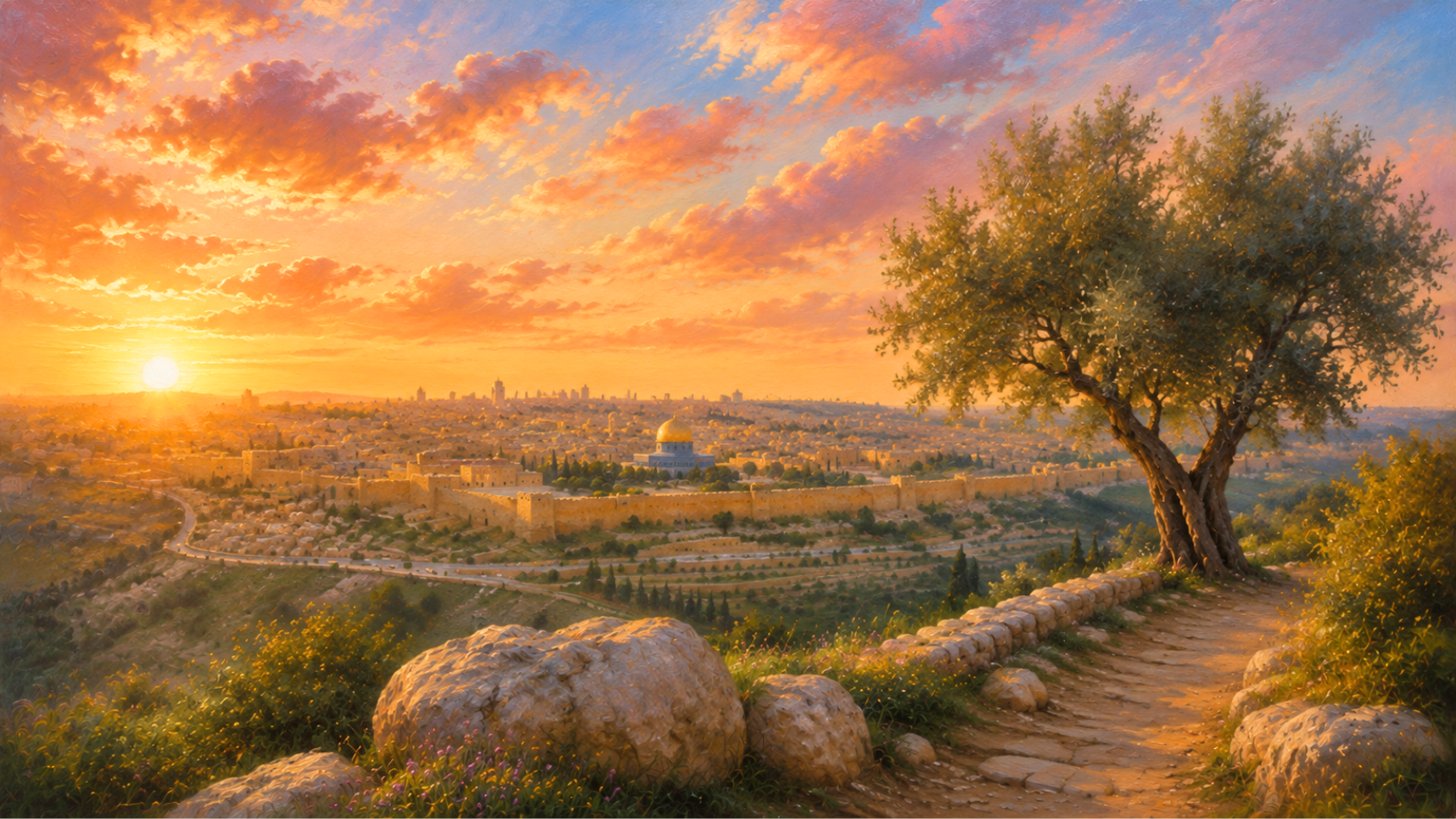
Zechariah ministered alongside Haggai after the Jewish exiles returned from Babylon. While Haggai encouraged the people to rebuild the temple, Zechariah strengthened their hope by reminding them that God was still fulfilling His covenant promises.
Through a series of vivid visions, Zechariah revealed that the Lord had not abandoned His people. Though the work seemed small and the future uncertain, God was at work behind the scenes, accomplishing His purposes.
The second half of the book looks beyond Zechariah's own day to the coming Messiah. It speaks of a humble King entering Jerusalem on a donkey, a Shepherd who would be rejected, thirty pieces of silver, One who would be pierced, and a future day when the Lord would reign over all the earth.
Throughout the book, God's message remains consistent: return to Him in faith, trust His promises, and look forward with hope.
Zechariah reminds us that God is always at work, even when we cannot see the whole picture.
The returned exiles saw unfinished walls and a modest temple. God saw the unfolding of His plan that would one day bring the Messiah into the world.
The book also encourages perseverance. God's promises often unfold over generations, but they never fail. His people are called to remain faithful, knowing that He is accomplishing His purposes in His perfect time.
Above all, Zechariah invites us to live with hope because God's King is coming.
Few Old Testament books point to Jesus as clearly as Zechariah.
The prophet foretold that Israel's King would come humbly, riding on a donkey:
"Rejoice greatly, Daughter Zion!... See, your King is coming to you; he is righteous and victorious, humble and riding on a donkey..."
— Zechariah 9:9 (CSB)
This prophecy was fulfilled during Jesus' triumphal entry into Jerusalem (Matthew 21:4–5).
Zechariah also foretold the betrayal of the Shepherd for thirty pieces of silver (Zechariah 11:12–13), the striking of the Shepherd that would scatter the sheep (Zechariah 13:7), and the One who would be pierced (Zechariah 12:10). Each of these passages is connected to Jesus' final days in the New Testament.
The book concludes with the hope that the Lord will reign over all the earth (Zechariah 14:9), pointing forward to the complete fulfillment of Christ's kingdom.
Zechariah has been treasured by God's people since ancient times as one of the Twelve Minor Prophets. Its message of encouragement, restoration, and future hope strengthened the returned exiles and pointed them toward God's unfolding plan of redemption.
Both Jewish and Christian communities recognized Zechariah as inspired Scripture. Its many prophecies concerning the Messiah are frequently echoed or fulfilled in the New Testament, making it one of the most significant prophetic books for understanding the life and ministry of Jesus.
Zechariah reminds us that God's promises never fail. Though His people may face discouragement and delays, the Lord continues working according to His perfect plan. The book fills our hearts with hope by pointing again and again to the coming Messiah—the humble King, the faithful Shepherd, the One who was pierced for His people, and the Lord who will one day reign over all the earth. Zechariah calls us to return to God with confidence, knowing that His kingdom is sure.
Zechariah's Place in God's Plan
Creation → Fall → Covenant → Christ → Grace → New Heaven & Earth
Zechariah at a Glance
Author: Zechariah, son of Berechiah, son of Iddo.
Purpose: To encourage God's people to complete the rebuilding of the temple while proclaiming God's future kingdom and the coming Messiah.
Date Written: Approximately 520–518 BC (with later prophecies likely added during Zechariah's ministry).
Historical Setting: Jerusalem after the Babylonian exile during the rebuilding of the Second Temple.
Original Audience: The Jewish exiles who had returned to Judah.
Original Language: Hebrew
Literary Style: Prophecy, visions, symbolic imagery, and apocalyptic literature.
Chapters: 14
Key People: Zechariah, Joshua the high priest, Zerubbabel.
Key Places: Jerusalem, Judah, the temple.
Earliest Biblical Manuscripts: Portions of Zechariah are preserved among the Dead Sea Scrolls as part of the Book of the Twelve (2nd century BC–1st century AD). The oldest nearly complete Hebrew text is found in the Leningrad Codex (AD 1008), with ancient translations preserved in the Greek Septuagint.
