
God-Given Creativity
Reflecting The Creator Through Our Gifts
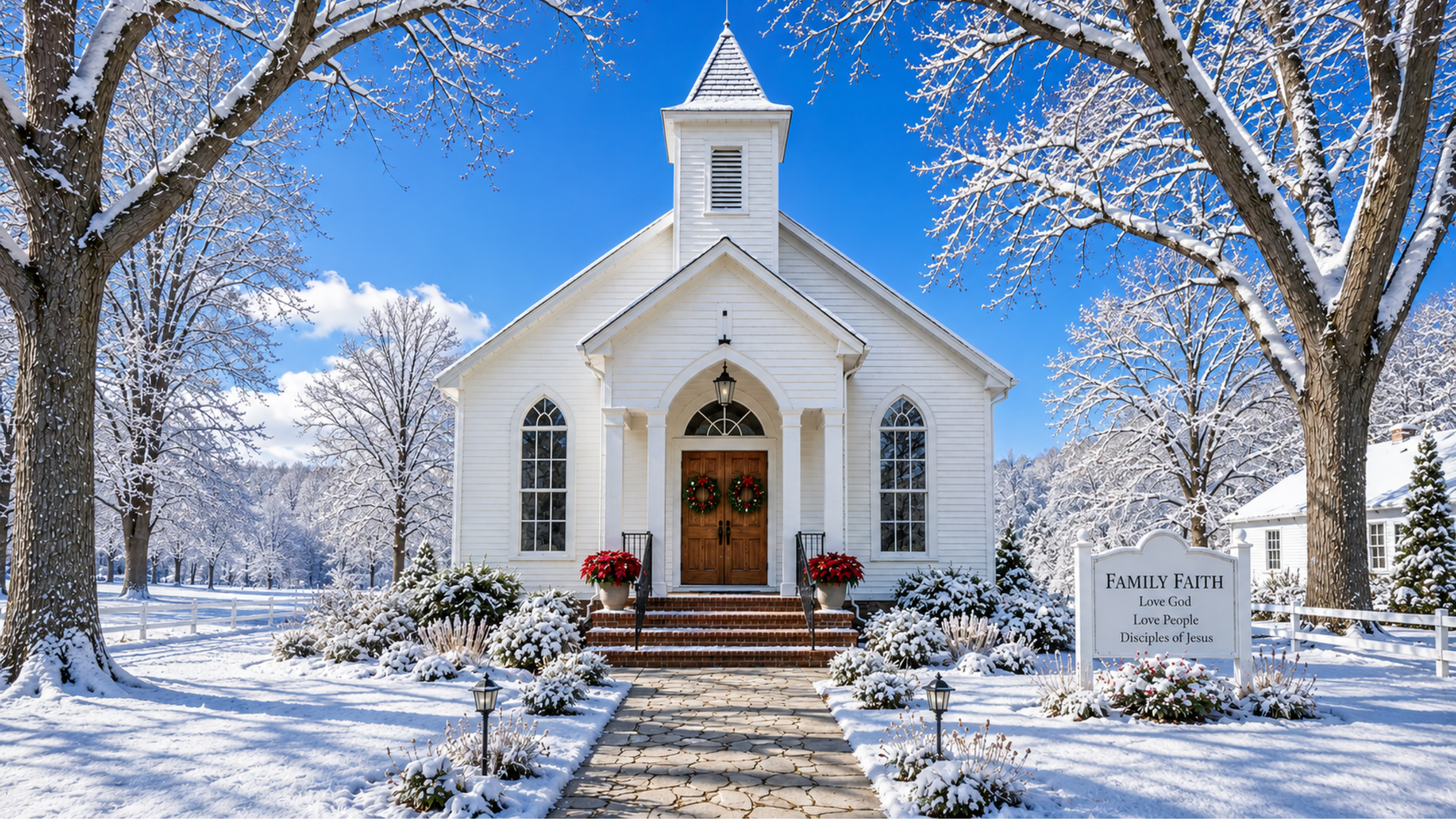
Family Faith: Chapter 3 — The Talanoa Family
In the Talanoa home, creativity often appeared in quiet and unexpected ways. Tavita Talanoa, a steady and thoughtful father, believed that children learned best when they were guided with patience rather than under performance pressure. His wife, Anna, filled their home with a gentle warmth and careful order. At the same time, their children—Leilani and Micah—were discovering their own small ways to reflect the talents God had placed within them. Both Tavita and Anna had spent most of their lives within the church congregation, shaped over the years by its steady rhythms and the quiet faith of the older generations who had come before them.
On a cold afternoon, six-year-old Micah stood just inside the garage, his hands tucked warmly into the sleeves of his knit sweater. Tavita was measuring a long piece of wood across two sawhorses. His large, broad-shouldered Samoan frame was dressed in a simple, solid-toned shirt. The clean smell of fresh-cut lumber mixed with the crisp winter air drifted in through the open garage door. On the nearby floor sat a small pile of wooden blocks that Micah had carried out earlier. He stacked them carefully, testing each layer, watching closely to see what held firm.
“What are you making, Papa?” Micah asked.
“A stage for the children’s choir down at church,” Tavita said, his deep voice calm and slow. “We want to give them something steady to stand on when they sing.”
Micah nodded, then looked back down at his blocks. “I could help,” he said quietly, his face full of childlike sincerity. “But I’m still kind of little.”
Tavita set his measuring tape down on the workbench and turned toward his son. “You’re never too little to think,” he said gently. “And thinking is exactly where building starts.”
He pulled a folded piece of paper from his pocket and opened it on the bench. It was a simple sketch, with light pencil lines—nothing complicated or flashy. “What do you think would make it strong?” Tavita asked.
Micah climbed onto the sturdy wooden stool beside his father. He studied the drawing, then stacked two blocks together and pressed them with his thumb. “If you put one right here,” he said, adjusting the pieces, “it won’t tip.”
Tavita smiled proudly. “That’s a very good idea, Micah.”
They worked side by side after that. Tavita cut and fitted the wood, while Micah tested shapes with his blocks, learning where balance mattered most. When Micah grew quiet, Tavita spoke again—not to give a rigid lecture, but simply to steady his son's heart.
“The Bible says that God gives each of us different gifts,” Tavita said, his voice carrying the gentle rhythm of his heritage. “He doesn't give them to us so we can show off to the neighbors. He gives them so we can use them to help each other.”
Micah nodded slowly, weighing the big idea the same way he balanced the wooden blocks in his hands.
Inside the house, eleven-year-old Leilani practiced with the other children from the church choir. Their young voices rose together in a careful, sweet harmony. Leilani, who carried her father's warm Polynesian skin and her mother's sharp focus, had discovered that singing came naturally to her.
Anna listened from the kitchen as she prepared a cake, her fair skin catching the afternoon light. The music filled the room without demanding her attention. Leilani’s voice wasn’t louder than the other children's voices; it simply blended in—confident, sure, and content. When the rehearsal ended, Leilani came into the kitchen and leaned against the counter.
“I wish I could sing like that,” Anna said softly, a look of quiet appreciation in her blue eyes.
Leilani looked at her mother, completely surprised. “But Mom—your cakes are the best in the county. Everyone at church always looks for them first.”
Anna smiled humbly. “That’s not really the same thing as a song, sweetheart.”
Leilani shrugged her shoulders. “It kind of is, though. People are just plain happy when you make them.”
The words stayed with Anna as she finished preparing the cake. She smoothed the ivory frosting carefully—not trying to make it look impressive or spectacular, just good and honest.
The night of the recital, the church fellowship hall filled up slowly with neighbors. The children lined up near the front, nervous and excited all at once. But beneath their feet, the stage Tavita and Micah had built stood absolutely firm—plain, sturdy, and just enough for the task. Micah ran his hand along the smooth edge once, checking their work, and then sat down quietly beside his father.
When the choir began, Leilani sang beautifully with the other children, her melody lifting and settling among theirs. Anna felt something quiet and full rise up in her chest—not a boastful pride, but a deep, unhurried gratitude. Later, people gathered around the tables to enjoy the food. Anna’s cake was already being sliced, and simple plates were filled. A neighbor smiled and nodded warmly to her as they passed by.
As the evening wound down and the wooden chairs were stacked, the Talanoa family lingered together near the door. Micah leaned sleepily against Tavita’s side.
“I helped build it, Papa,” he said softly.
“Yes, you surely did, sefe,” Tavita replied, using the warm term of endearment.
Leilani hummed pieces of the melody under her breath as she carried a plate, and Anna wiped down the last table, unhurried and peaceful. As they stepped outside into the cool night air, Anna thought about the beautiful evening. Her thoughts didn't dwell on who had been singled out or noticed by the crowd. She thought instead about how each of them had simply offered something real to the church family.
A familiar scripture came clearly to her mind: “So God created mankind in His own image.” And along with it, another truth about following Jesus' teachings was freshly understood: “As each has received a gift, use it to serve one another, as good stewards of God's varied grace.”
Creativity, she finally realized, wasn’t about individual skill or chasing a public spotlight. It was about reflecting the God who creates, and using what He gives for the good of the people around us. They created simply because their Father was the Creator. And in offering those humble gifts to one another, they had lived out their faith quietly, together.
This is God-Given Creativity, from The Family Faith Series by The Cardinal and Dove.
If these stories bring clarity to your heart today, we invite you to bookmark this space and share this post with someone who might need it, so we can continue walking the simple way of Christ with others through the Family Faith series. Let's quiet the noise and fix our eyes on Him together. We’re so glad you’re here.
