
Isaac’s Wells
Living Water Reclaimed in Quiet Faith
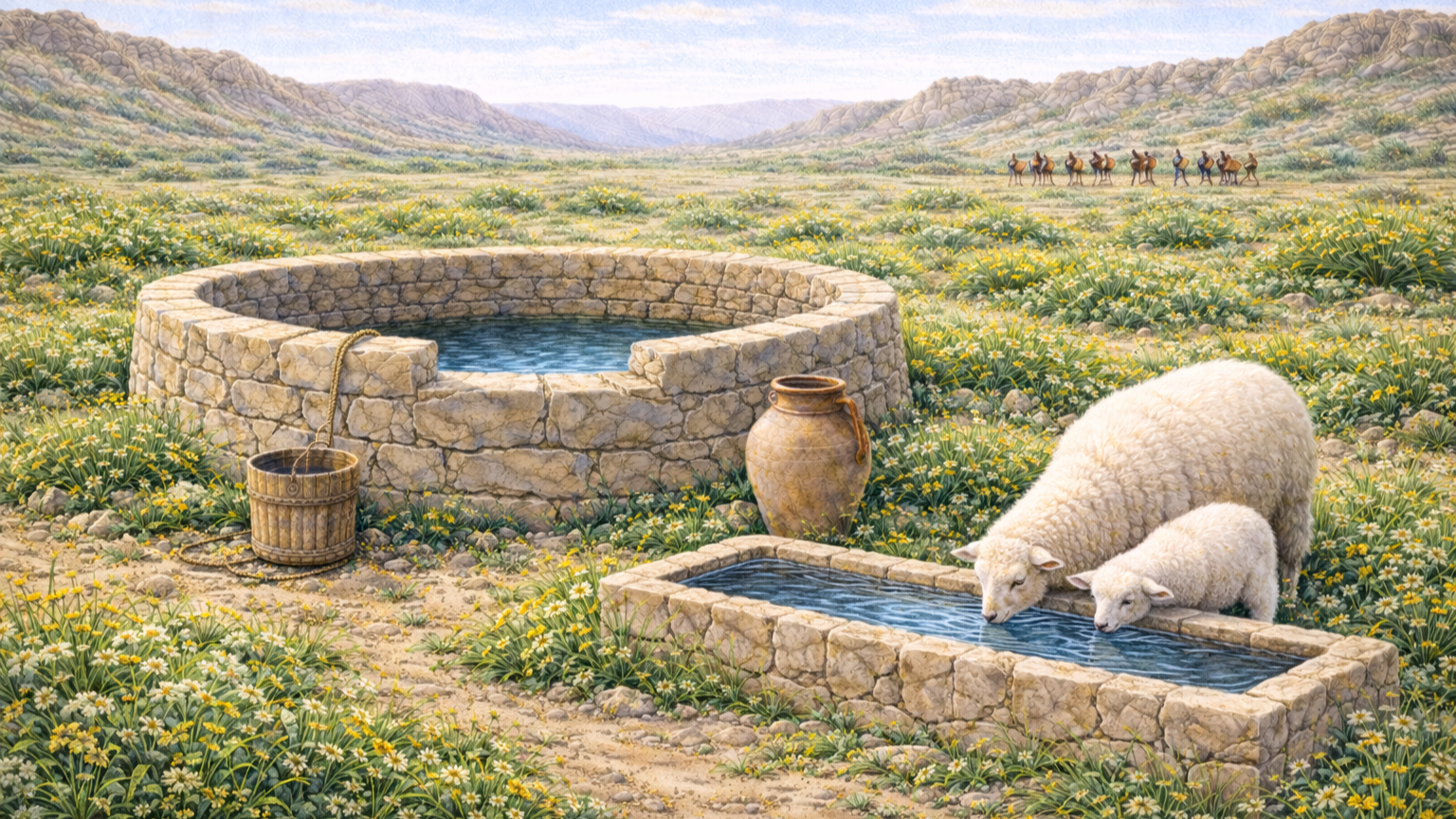
Have you ever continued walking faithfully with God while facing resistance from those who do not share your faith? Not open hostility, but steady opposition—people questioning your path, making the work harder, or quietly hoping you will move on. This story begins in such a place.
In the book of Genesis, Isaac lived in the land where his father, Abraham, had once lived and worshiped God. God blessed Isaac greatly. His household grew, his flocks multiplied, and his fields prospered even during a time of famine. It became clear to those around him that God’s favor rested on his life.
And with that blessing came a need.
More people meant more mouths to feed. More animals require more water. Growth demanded provision, and provision meant returning to the deep places where water could be found.
So Isaac turned his attention to the wells.
Years earlier, his father Abraham had dug wells—deep, life-giving places where water flowed, and families could flourish. Over time, those wells had been filled in and forgotten, deliberately stopped up by others who no longer wanted Isaac’s family to remain in the land. Isaac began the quiet, necessary work of reopening them, clearing away what had been blocked so that life could continue.
But each time water appeared, trouble followed.
The herdsmen of the land argued with Isaac’s servants and claimed the wells as their own. Voices were raised. Disputes followed. These herdsmen belonged to the kingdom of Gerar, ruled by King Abimelech, the authority over the land, its people, and its peace. Though Isaac lived among them as a foreigner, his growing strength and steady prosperity did not go unnoticed by the king or his officials.
Isaac had the strength to fight back. He had every right to defend what belonged to him.
But he chose not to fight.
This is the moment worth holding.
Instead of responding with force, Isaac moved on and dug again. When the same thing happened a second time, he moved again. He did not abandon the work. He did not stop seeking what God had already provided. Again and again, in a dry and contested land, Isaac found water.
This was not luck.
Finding water once might have seemed accidental. Finding it again and again revealed something more. In a land where water meant survival, Isaac’s steady success became impossible to ignore. Even opposition could not stop what God was doing.
At last, Isaac came to a place where no one argued with him. The water flowed freely, and there was room for his household to grow in peace. Isaac named the place Rehoboth, saying that God had finally made room for them.
The water had been there all along.
Eventually, even those who had opposed Isaac were forced to acknowledge what they were seeing. His prosperity continued. His wells remained open. His household lived in peace. At last, King Abimelech—the ruler of the land—and his officials came to Isaac and spoke plainly.
“We saw clearly that the Lord was with you.”
They did not speak from sudden faith or spiritual awakening. They spoke from recognition. God’s presence on Isaac’s life had become too evident to deny. Opposing him no longer felt wise.
Long before the Carpenter came, God was already teaching His people something important. Faith is not always loud. It does not always demand its rights. Sometimes it trusts God enough to keep doing the work quietly, believing that God will make room at the right time.
Opposition does not mean God has withdrawn His favor.
Sometimes it reveals it.
Much later, Jesus—the Carpenter—would speak of living water, offered freely to all who were willing to come to Him. He would not force belief or argue His authority. He would continue offering life, trusting that those who were truly thirsty would seek it.
Like Isaac, Jesus would respond to resistance not with aggression, but with steady faithfulness. And like Isaac, His life would make God’s presence unmistakable—even to those who did not believe.
Isaac’s faith was not loud.
It was steady.
He trusted that if God had provided once, God would provide again.
If you find yourself walking faithfully while facing quiet resistance, this story speaks gently to you. It reminds us that spiritual blessings are worth tending, even when the work is slow, and that God’s presence becomes visible when we trust Him enough to keep digging.
God knows where the water is.
And He blesses those who do not give up.
